








Top-Top Info Worldwide is a popular online newsportal and going source for technical and digital content for its influential audience around the globe.

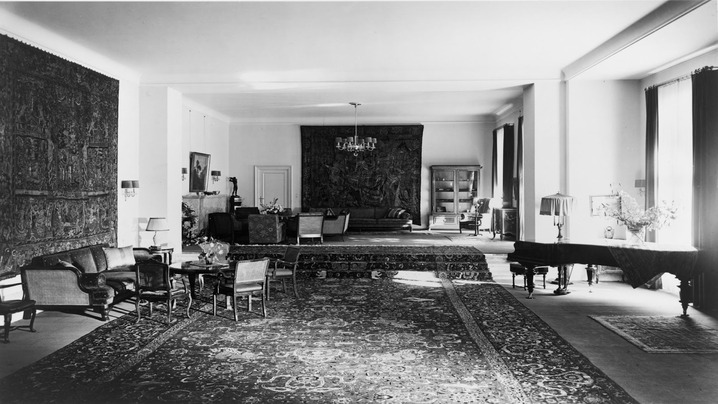
Places associated with Adolf Hitler should not be approached as celebrity homes. His residences and headquarters were settings where dictatorship was performed, policy was discussed, and a carefully manufactured public image concealed mass persecution and war. Three locations—the Munich apartment at Prinzregentenplatz, the Berghof on the Obersalzberg, and the bunker complex beneath the Reich Chancellery garden—show how supposedly private space could become part of the machinery and mythology of the Nazi regime.
Hitler moved into an apartment at Prinzregentenplatz 16 in Munich in 1929, before the Nazi seizure of national power. The address marked his rise from political agitator to the leader of a growing, well-financed movement. After 1933, the apartment was no longer simply a home. Security, official visitors, public attention, and the regime’s cult of personality transformed the building’s meaning.
Munich occupied a special place in Nazi self-presentation as the movement’s birthplace. Sites tied to Hitler’s early career were used to create an invented story of destiny and national renewal. That propaganda obscured the movement’s actual program: the destruction of democracy, antisemitic exclusion, racial persecution, political imprisonment, and territorial aggression. The apartment therefore matters historically not for its décor or dimensions, but for the way an ordinary urban address became a stage for authoritarian prestige.
The building still exists, but it is not a shrine or conventional tourist attraction. That restrained treatment reflects a broader challenge in public history: how to document a perpetrator’s environment without turning it into a place of admiration.
On the Obersalzberg near Berchtesgaden, Hitler expanded a modest holiday house into the Berghof. The surrounding area was radically transformed after 1933. Local residents were displaced, a restricted leadership compound was built, and extensive infrastructure supported the Nazi elite. Forced labor was also used in construction connected to the complex.
The Berghof’s mountain scenery was central to propaganda. Photographs and films presented Hitler as relaxed, approachable, and close to nature—a calculated contrast to formal displays of state power. Yet the building was also a second seat of government. Officials and foreign guests came there, and Hitler conducted political and military business amid the carefully designed domestic setting. The contrast between alpine calm and destructive policy is precisely why the site requires critical interpretation.
Allied bombing damaged the Berghof in 1945, and its ruins were later demolished to prevent the area from becoming a gathering place for admirers. Today, Dokumentation Obersalzberg interprets the landscape through the relationship between propaganda, dictatorship, exclusion, war, and mass murder.
The underground bunker associated with Hitler’s final weeks stood beneath the garden of the New Reich Chancellery in Berlin. It was a command shelter, not a normal residence. As Soviet forces entered the city in April 1945, Hitler and members of his entourage remained below ground while the war he had launched continued to kill soldiers and civilians. He died there by suicide on 30 April.
The site’s physical remains are inaccessible and largely covered by later development. A historical information panel identifies the area without monumentalizing it. That choice keeps attention on evidence and consequences rather than creating an architectural attraction around the dictator’s death.
These places are historically significant because they expose how power was normalized and packaged. Their responsible study should dismantle propaganda, not reproduce its fascination.
Sources: Dokumentation Obersalzberg: Historic Location; Dokumentation Obersalzberg: Permanent Exhibition; U.S. Holocaust Memorial Museum; German Federal Archives.

Cat-breed popularity is not a universal fact. Registration totals cover pedigreed cats in a particular organization, shelter populations are mostly not represented, and rankings change by country and year. A better guide introduces widely recognized breeds while helping prospective guardians evaluate care, health, and individual temperament.
Ragdolls are large, semi-longhaired cats often described by breed organizations as relaxed and people-oriented. Their coat needs routine combing, and size affects food, carriers, litter boxes, and handling. Responsible breeders should discuss screening for inherited heart disease found in some lines.
The Maine Coon combines a substantial frame with a shaggy coat and tufted appearance. Many are social and playful, but a breed description cannot predict every cat’s personality. Ask about cardiac and orthopedic health screening, and budget time for grooming.
Persians are known for long coats and a quiet demeanor. Daily grooming may be needed. Extremely flat facial structure can be associated with breathing, eye, dental, and heat-tolerance problems, so appearance should never outrank welfare. Seek moderate features and transparent veterinary records.
These stocky cats have dense coats and are often less demanding of constant activity than some breeds. They still need play, weight management, scratching opportunities, and companionship on their own terms. Dense coat does not mean maintenance-free, especially during shedding.
Siamese cats are typically vocal, active, and highly engaged with their environment. Someone who wants a quiet, independent pet may find that intensity challenging. Interactive play, climbing spaces, and regular social contact are important outlets.
Bengals descend from a breeding program involving domestic cats and Asian leopard cats, though recognized generations are domestic companion animals. Many are athletic and curious. Prospective homes should plan for substantial enrichment and verify local rules, generation status, and health testing.
Lack of a typical fur coat does not make a Sphynx hypoallergenic. Allergens are also found in saliva and skin secretions. Skin and ears need regular care, and these cats require protection from temperature extremes and sun exposure.
Abyssinians are slender, agile cats often associated with high activity and exploration. Tall climbing structures, food puzzles, and daily play can help. A household seeking a lap cat should meet the individual rather than rely on a generalized label.
The folded ears result from a cartilage-affecting mutation that can also cause painful skeletal disease. This is a serious welfare issue, not merely a cosmetic trait. Some veterinary and animal-welfare authorities oppose breeding cats for the fold. Buyers should understand the health implications before creating demand.
Not a single pedigree breed, domestic shorthairs represent a huge share of companion cats. Shelters offer individuals with many sizes, colors, ages, and personalities. An adult cat’s established behavior may be easier to assess than a kitten’s eventual temperament.
TICA advises meeting breeds, learning their special needs, and considering shelter adoption. The AVMA likewise recommends evaluating allergies, behavior, lifelong cost, and veterinary needs. Popularity may start someone’s search, but health, welfare, and a good individual match should finish it.
Sources: The International Cat Association; TICA responsible selection guide; American Veterinary Medical Association; Universities Federation for Animal Welfare.
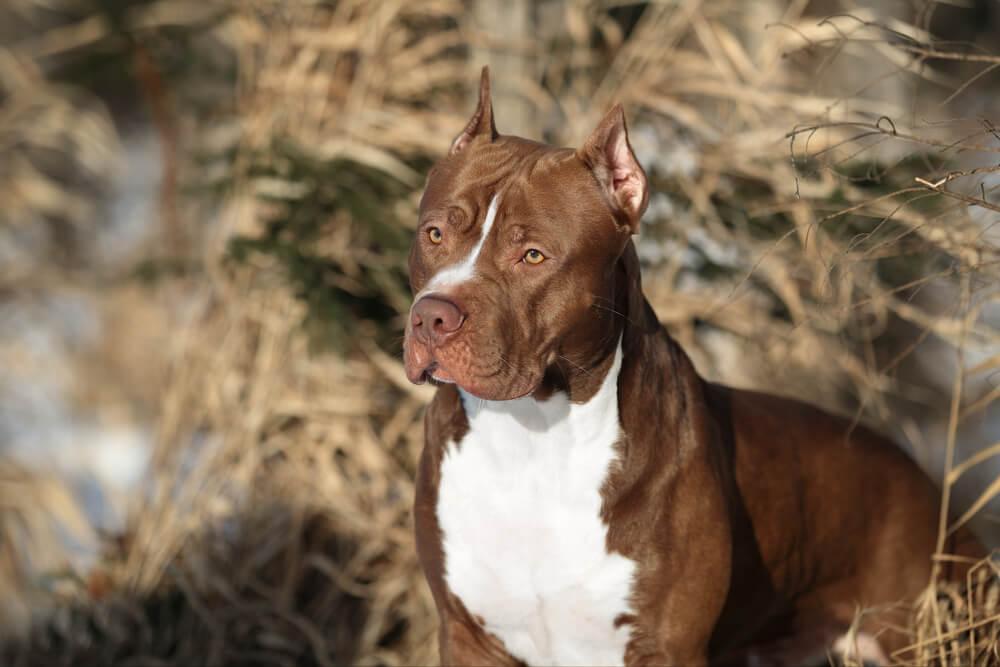
Dog bites are a real public-health problem, and severe injuries deserve serious prevention. But ranking breeds from safest to most dangerous suggests a level of certainty the data cannot support. The Centers for Disease Control and Prevention states that any dog can bite, particularly when frightened, nervous, in pain, eating, protecting resources, or caring for puppies.
Breed can relate to size, strength, inherited tendencies, and the consequences of an incident, but it does not determine an individual dog’s behavior. Risk emerges from several interacting factors: breeding, early experience, socialization, health, training, restraint, household conditions, owner behavior, victim vulnerability, and the immediate situation.
A meaningful bite rate requires both a numerator—the number of incidents involving a breed—and a denominator—the number of those dogs in the relevant population. Reliable denominator data are often unavailable. Common breeds may appear frequently simply because more of them exist. Many bites are never reported, while severe events attract disproportionate media attention.
Breed identification is another major weakness. Dogs may be visually labeled by witnesses, owners, officials, hospital staff, or reporters without pedigree or genetic information. Mixed-breed dogs complicate categories further, and labels such as “pit bull type” can include dogs with different ancestry and appearance. A review in the Journal of the American Veterinary Medical Association concluded that inconsistent data collection prevents confident conclusions about the predisposition of specific breeds to bite or cause severe injury.
Growling is an important warning, not misbehavior to punish automatically. Other signs of discomfort can include freezing, turning away, repeated lip licking, a tucked tail, stiff posture, showing the whites of the eyes, retreating, or trying to hide. Context matters, and not every dog displays every signal. Give the animal space and seek qualified help when behavior changes suddenly or aggression appears.
A veterinarian should first assess pain or medical causes. For serious behavior concerns, owners can ask for referral to a board-certified veterinary behaviorist or another appropriately credentialed professional using humane, evidence-based methods.
Select a dog for the household’s actual capacity rather than appearance or reputation. Ask shelters, rescues, or breeders about known behavior and health, while recognizing that predictions are imperfect. Use early, positive socialization; reward-based training; secure fencing; leashes where required; and careful introductions. Manage access to visitors and children instead of expecting training alone to eliminate risk.
Teach children not to disturb a dog that is eating, sleeping, hiding, injured, or caring for puppies. They should ask the owner before approaching an unfamiliar dog and allow the dog to choose contact. Adults should avoid breaking up a dog fight with bare hands.
Move to safety and wash the wound promptly with soap and water. Seek medical advice for deep wounds, uncontrolled bleeding, infection signs, bites to the face or hands, or injuries to children. Contact local public-health or animal-control authorities as required, and obtain information about rabies vaccination when possible. Rabies risk varies by location and exposure, so urgent professional guidance matters.
Good policy focuses on behavior and responsible management: enforce containment, respond to documented dangerous conduct, educate owners, improve bite reporting, support access to veterinary care, and evaluate each dog individually. Breed labels may feel simple, but prevention works best when it addresses the conditions that lead to bites.
Sources: CDC: Dogs and Bite Prevention; American Veterinary Society of Animal Behavior: Breed-Specific Legislation; Journal of the AVMA: Animal Bites Review; CDC: Rabies Post-Exposure Guidance.
Top-Top Info Worldwide is a popular online newsportal and going source for technical and digital content for its influential audience around the globe.