








Top-Top Info Worldwide is a popular online newsportal and going source for technical and digital content for its influential audience around the globe.


Each of us is blessed by nature with moles - details of our appearance that cause controversial opinions. We have gathered the stars who love or hate moles on their bodies.

If you feel again that your life is meaningless and useless, take a look at these photos. Life is not meaningful in itself, but through our actions. Life is the time we fill with real emotions and useful work. Look and be inspired.

The fastest cars are racing cars. But it is forbidden to drive them on public roads. We have collected cars with sporty characteristics, on which you can legally and very quickly drive around the city.
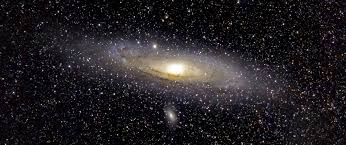
Claims about the largest galaxy depend on what is being measured. A galaxy's bright stellar body has one diameter, its diffuse halo another, and radio-emitting jets and lobes can extend far beyond both. Distance estimates, telescope sensitivity and the chosen brightness threshold also change the answer. New observations can reveal a faint outer envelope that earlier surveys missed. It is more accurate to compare categories than to publish a fixed top ten.
Optical diameter usually describes the region where starlight remains above a defined surface brightness. That definition is practical but not a hard physical edge: stars thin gradually into a halo. Mass is different again. A galaxy with a larger visible diameter may contain less stellar mass than a compact object, while both sit inside dark-matter halos that cannot be photographed directly.
Radio galaxies create another category. Supermassive black holes can power jets that inflate lobes millions of light-years from the host. Those structures belong to the galaxy's activity, but they are not a disk or sphere filled with its stars. Comparing a radio-lobe span with an optical stellar diameter is like comparing a lighthouse building with the distance reached by its beam.
Ask whether the number describes stars, gas, a dark-matter halo or radio emission. Check whether it is a diameter, radius or projected length. Look for uncertainty in the object's distance and for the wavelength used. Finally, note the publication date: deeper surveys and revised cosmological measurements can change both individual values and the title of largest known.
The scientifically interesting question is not merely which object wins. Giant galaxies test models of mergers, gas supply, star formation, black-hole feedback and cluster evolution. Their fuzzy boundaries are a feature of the universe—and a reason honest comparisons need definitions.
Sources: NASA Science: Galactic scale; ESA/Hubble: UGC 2885; NASA Science: Galaxies; Astronomy & Astrophysics: Alcyoneus.

Today we will go on an unusual journey around the world and see how the coolest, brightest and simply beautiful metro stations look like. These are not just stops of public transport, which are used by hundreds of thousands of people every day, but real works of art.
Top-Top Info Worldwide is a popular online newsportal and going source for technical and digital content for its influential audience around the globe.