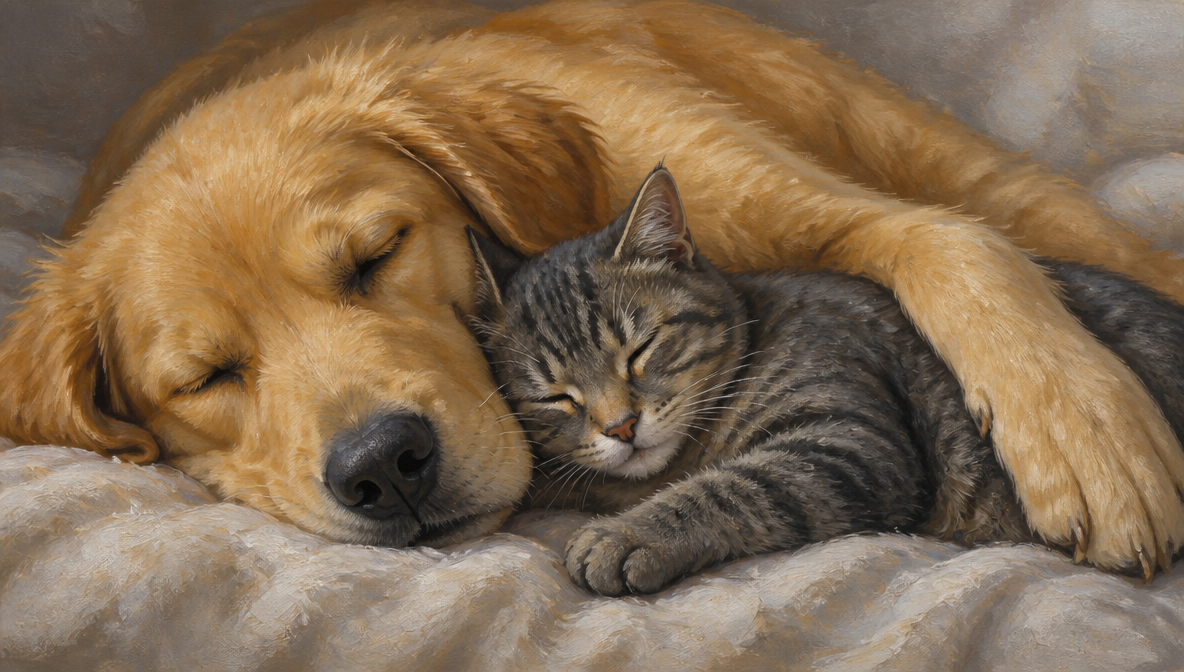
The debate between "cat people" and "dog people" has lasted for centuries, and for a good reason. Cats and dogs possess fundamentally different personalities, communication styles, and emotional needs. These behavioral contrasts are not accidental; they are deeply rooted in the evolutionary history of how these animals survived in the wild and how they were eventually domesticated by humans.
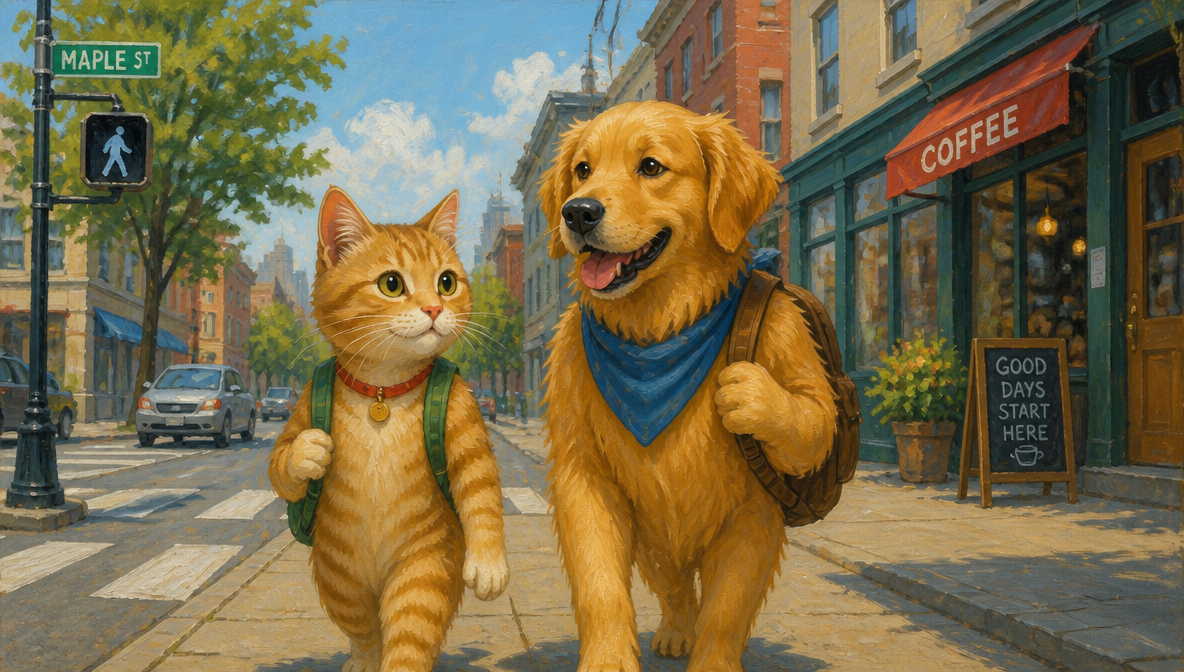
The debate between "cat people" and "dog people" has lasted for centuries, and for a good reason. Cats and dogs possess fundamentally different personalities, communication styles, and emotional needs. These behavioral contrasts are not accidental; they are deeply rooted in the evolutionary history of how these animals survived in the wild and how they were eventually domesticated by humans.
1. Social Structure: Pack Animals vs. Solitary Hunters
The most profound difference in character stems from their ancestral roots. Dogs are natural pack animals, descendants of wolves. Their psychology is built around hierarchy, cooperation, and loyalty to a leader. To a dog, its human family is its pack, and they feel an innate need to belong, please their leader, and fit into the social structure.
In contrast, cats are solitary hunters. Descended from the African wildcat, they evolved to survive, hunt, and defend themselves entirely on their own. Because of this, cats are fiercely independent. They do not view humans as "masters" or pack leaders, but rather as roommates or cohabitants. A cat’s affection must be earned, and they are perfectly content spending hours entirely alone.
2. Communication and Expressiveness
Dogs are emotional open books. They express their joy, anxiety, or excitement with high-energy physical cues: wagging tails, barking, jumping, and licking. When a dog is happy to see you, their entire body shows it. They thrive on direct eye contact and active engagement.
Cats communicate in a much more subtle, nuanced language. A twitch of a tail, a slight flattening of the ears, or a soft purr can signal a vast range of emotions. While a dog demands attention, a cat offers it selectively. A cat showing affection might slowly blink at you, gently rub its cheeks against your legs, or quietly curl up nearby. Understanding a cat requires patience and close observation, as they value their personal space and boundaries.
3. Training and Motivation
A dog’s character makes them highly trainable. Because they are eager to please their owners, they are motivated by praise, toys, and food rewards. They look to humans for direction, which is why dogs excel at complex tasks, from basic obedience to service and rescue work.
Cats, however, are motivated purely by self-interest. They can be trained, but only if they see a direct benefit for themselves (usually a high-value treat). A cat will rarely perform a trick just to make you happy. If a cat decides to ignore a command, it is not out of stupidity, but out of a calculated choice that the action is not worth their effort.
Ultimately, dogs offer unconditional loyalty and shared activity, while cats offer quiet companionship and a lesson in respecting boundaries.
1. Social Structure: Pack Animals vs. Solitary Hunters
The most profound difference in character stems from their ancestral roots. Dogs are natural pack animals, descendants of wolves. Their psychology is built around hierarchy, cooperation, and loyalty to a leader. To a dog, its human family is its pack, and they feel an innate need to belong, please their leader, and fit into the social structure.

In contrast, cats are solitary hunters. Descended from the African wildcat, they evolved to survive, hunt, and defend themselves entirely on their own. Because of this, cats are fiercely independent. They do not view humans as "masters" or pack leaders, but rather as roommates or cohabitants. A cat’s affection must be earned, and they are perfectly content spending hours entirely alone.
2. Communication and Expressiveness
Dogs are emotional open books. They express their joy, anxiety, or excitement with high-energy physical cues: wagging tails, barking, jumping, and licking. When a dog is happy to see you, their entire body shows it. They thrive on direct eye contact and active engagement.
Cats communicate in a much more subtle, nuanced language. A twitch of a tail, a slight flattening of the ears, or a soft purr can signal a vast range of emotions. While a dog demands attention, a cat offers it selectively. A cat showing affection might slowly blink at you, gently rub its cheeks against your legs, or quietly curl up nearby. Understanding a cat requires patience and close observation, as they value their personal space and boundaries.
3. Training and Motivation
A dog’s character makes them highly trainable. Because they are eager to please their owners, they are motivated by praise, toys, and food rewards. They look to humans for direction, which is why dogs excel at complex tasks, from basic obedience to service and rescue work.
Cats, however, are motivated purely by self-interest. They can be trained, but only if they see a direct benefit for themselves (usually a high-value treat). A cat will rarely perform a trick just to make you happy. If a cat decides to ignore a command, it is not out of stupidity, but out of a calculated choice that the action is not worth their effort.
Ultimately, dogs offer unconditional loyalty and shared activity, while cats offer quiet companionship and a lesson in respecting boundaries.