
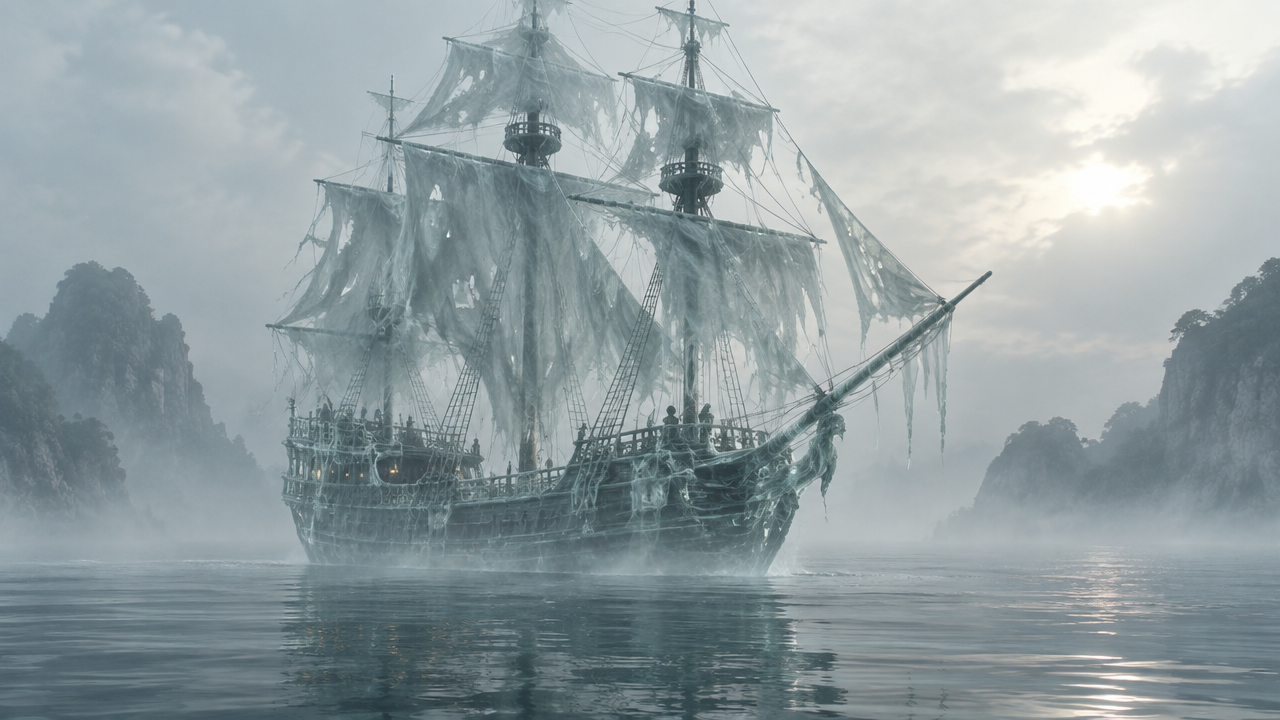
The ocean has always been a realm of mystery, a vast and unpredictable expanse where the line between reality and folklore easily blurs. Among the most chilling tales whispered by mariners throughout history are those of ghost ships—vessels found drifting unmanned, or phantoms doomed to sail the seas until judgment day. These maritime mysteries continue to captivate human imagination, blending historical fact with haunting legend.
The Legends and the Cursed
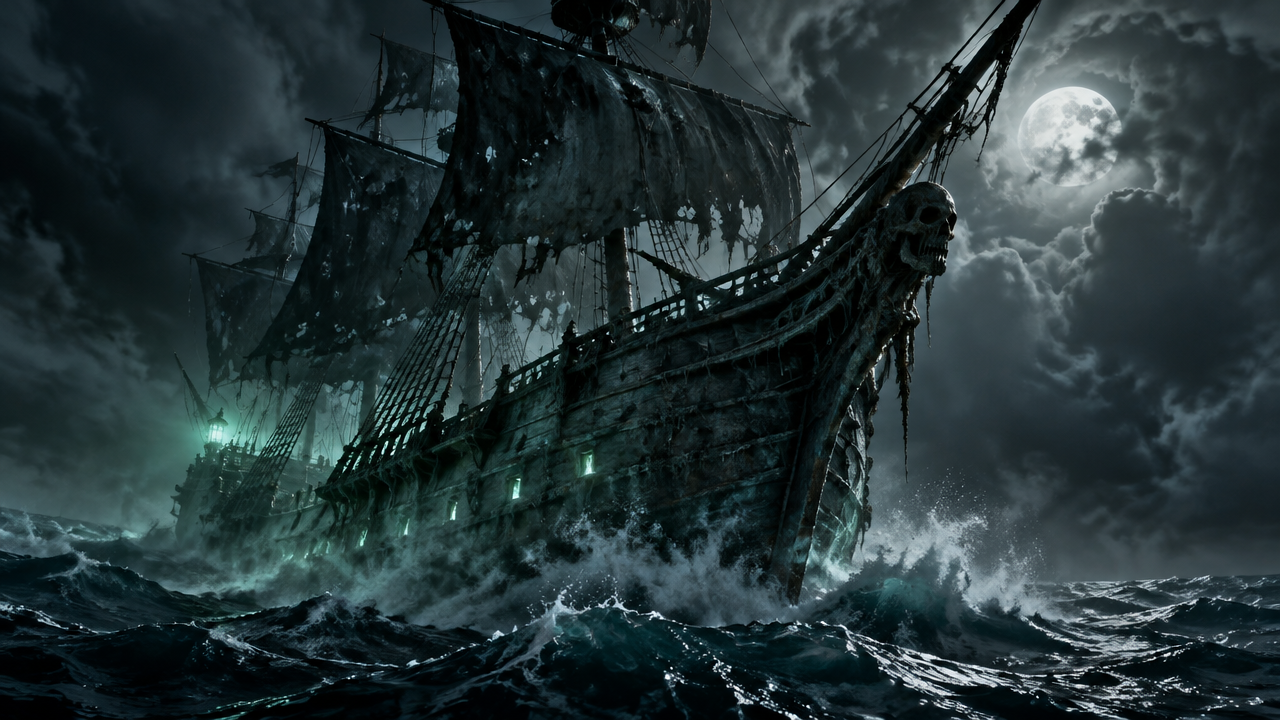
The most famous phantom ship in folklore is undoubtedly the Flying Dutchman. Legend says this 17th-century vessel was doomed by its captain’s hubris. Swearing an oath to round the Cape of Good Hope during a ferocious storm even if it took until doomsday, the captain cursed the ship to eternity. For centuries, sailors reported seeing a glowing spectral galleon hovering near the South African coast, a sight considered an omen of impending doom.
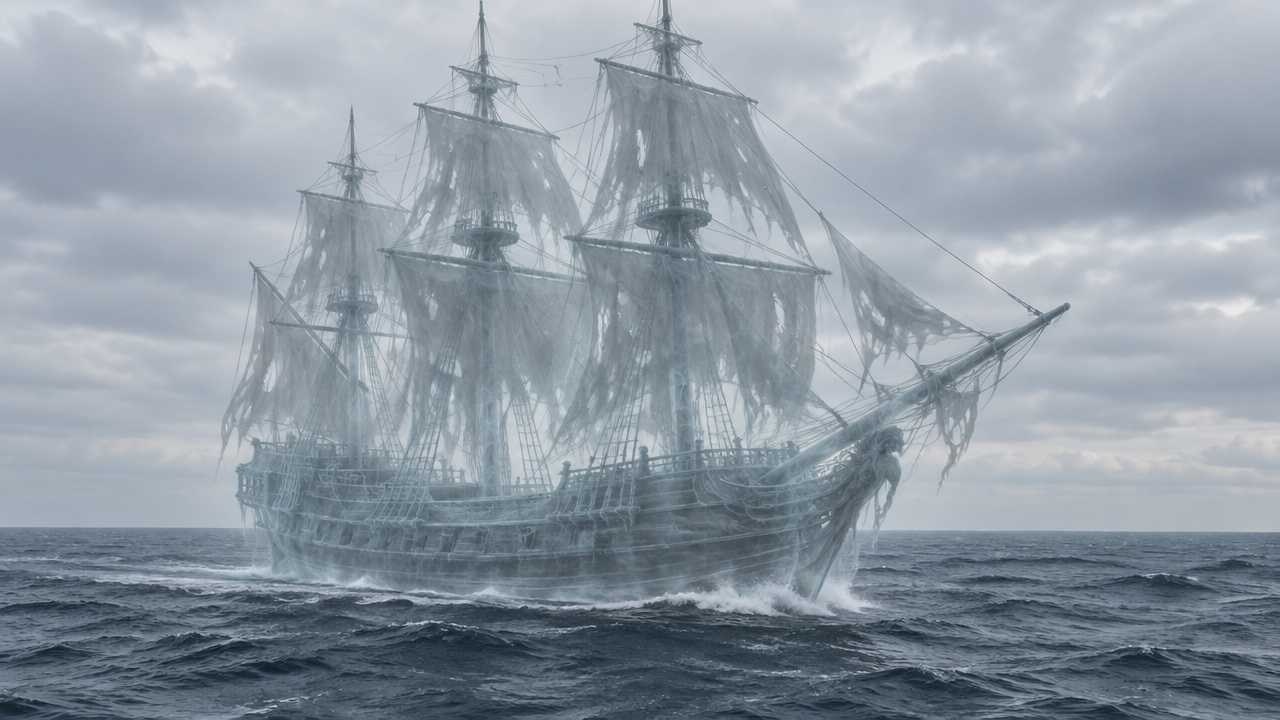
While the Flying Dutchman belongs to myth, real-world history offers equally terrifying anomalies. In 1872, the merchant brigantine Mary Celeste was discovered drifting in the Atlantic Ocean. The ship was completely seaworthy, with ample provisions and untouched cargo. Yet, the captain, his family, and the crew of seven had vanished without a trace. Their fates remain one of history’s greatest unsolved maritime puzzles, sparking theories ranging from piracy to sea monsters and toxic fumes.
The Modern Enigmas
Ghost ships are not just relics of the age of sail. Modern history has its own phantom vessels. In 1931, the SS Baychimo, a steel-hulled cargo steamer trapped in pack ice near Alaska, was abandoned by its crew. Instead of sinking, the ship broke free and spent the next 38 years drifting aimlessly through the Arctic waters. It was sighted dozens of times, but all rescue attempts failed due to shifting ice. The ship was last seen in 1969, and its final resting place remains unknown.
In recent decades, the phenomenon has taken a darker, more realistic turn. The term "ghost ships" is now often applied to unmanned North Korean fishing vessels that periodically wash ashore on the coasts of Japan. Discovered with no living crew, these boats highlight the tragic risks taken by fishermen venturing too far out into treacherous waters in search of food.
The Logic Behind the Ghostly Drifters
Why do ships become ghosts? Science and maritime law provide logical explanations for what seems supernatural. The most common causes include:
- Severe Weather: Raging storms can knock out communication systems and wash crews overboard.
- Sudden Evacuation: Facing perceived danger, such as a toxic gas leak, fire, or an imminent sinking that never actually happens, crews may abandon ship.
- Piracy: Criminal hijacking can lead to a crew being killed or marooned, leaving the vessel to drift.
- Economic Abandonment: Companies facing bankruptcy occasionally abandon old cargo vessels in international waters to avoid steep docking fees.
Whether fueled by ancient curses or the tragic realities of modern seafaring, ghost ships remain a haunting reminder of the ocean's unforgiving power. They are floating time capsules, carrying secrets that the deep blue sea may never reveal.