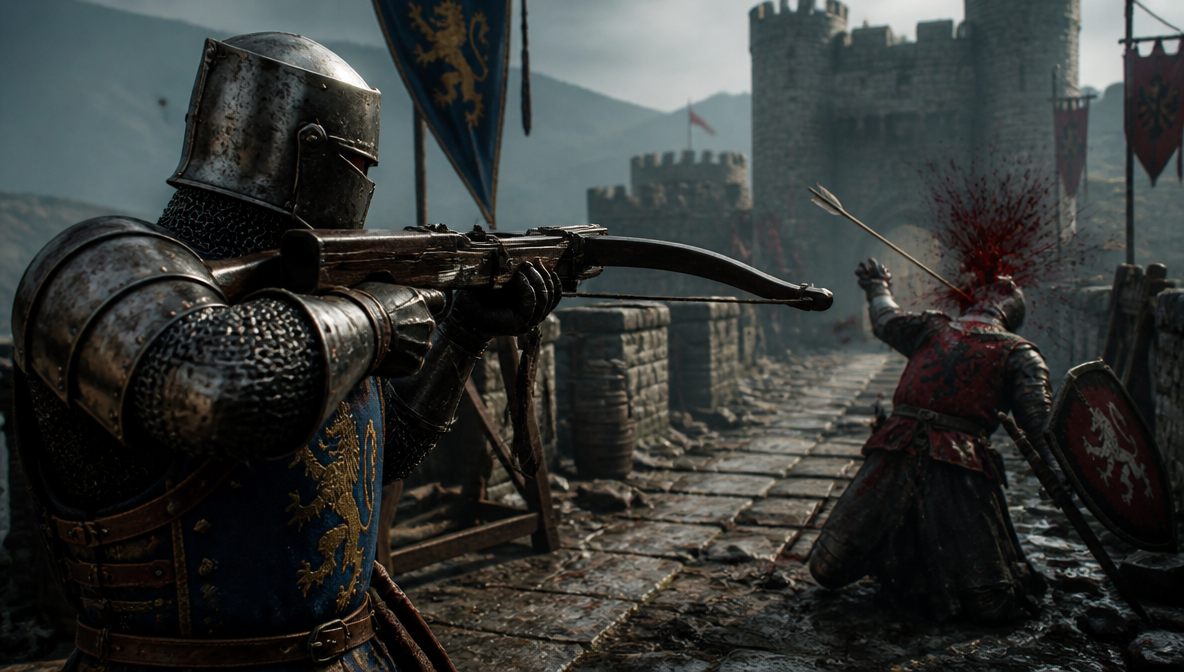
The crossbow represents one of the most significant technological leaps in the history of European warfare. Unlike the traditional longbow, which required a lifetime of physical training, the crossbow allowed a simple peasant to pierce the armor of a noble knight with the click of a trigger. However, the story of how the crossbow arrived and spread across Europe is a complex journey of ancient rediscovery, foreign adaptation, and social revolution.
The Ancient Roots: Greece and the Forgotten Tech
While many associate the crossbow strictly with the Middle Ages, its European history actually began in Ancient Greece around the 5th century BCE. The Greeks invented a primitive, stomach-braced mechanical bow called the gastraphetes (belly-bow). This weapon was powerful but heavy, used primarily in siege warfare.
Later, the Roman Empire developed its own smaller, handheld versions known as the manuballista and arcuballista. However, as the Western Roman Empire collapsed in the 5th century CE, the complex engineering skills required to build and maintain these weapons were largely lost to the chaos of the Dark Ages. For centuries, Europe forgot the mechanical bow, while imperial China independently perfected its own advanced crossbow designs.
The Medieval Resurrection (10th–11th Century)
The crossbow made its dramatic comeback in Europe during the late 10th and early 11th centuries. It began reappearing in French and Norman records. The weapon proved its terrifying effectiveness during the Norman Conquest of England in 1066, where William the Conqueror utilized crossbowmen alongside traditional archers to shatter the Anglo-Saxon shield wall at the Battle of Hastings.
By the 12th century, the crossbow had spread like wildfire across Western Europe, particularly in Italy. Cities like Genoa became famous for producing elite mercenary crossbowmen who rented their deadly skills to the highest royal bidders.
The Papal Ban and the Knightly Crisis
The sudden rise of the crossbow triggered a massive cultural shockwave. In medieval society, knights spent their entire lives training in the art of chivalric combat. The crossbow completely disrupted this feudal hierarchy. A low-born conscript, armed with a crossbow, could easily kill a wealthy, heavily armored knight from a safe distance without ever looking him in the eye.
This was viewed as dishonorable and deeply destabilizing to the social order. In 1139, Pope Innocent II issued a decree at the Second Lateran Council, officially banning the use of crossbows against fellow Christians, declaring the weapon "hateful to God." However, the ban was largely ignored. The tactical advantage of the crossbow was simply too great for European monarchs to abandon.
Technical Evolution
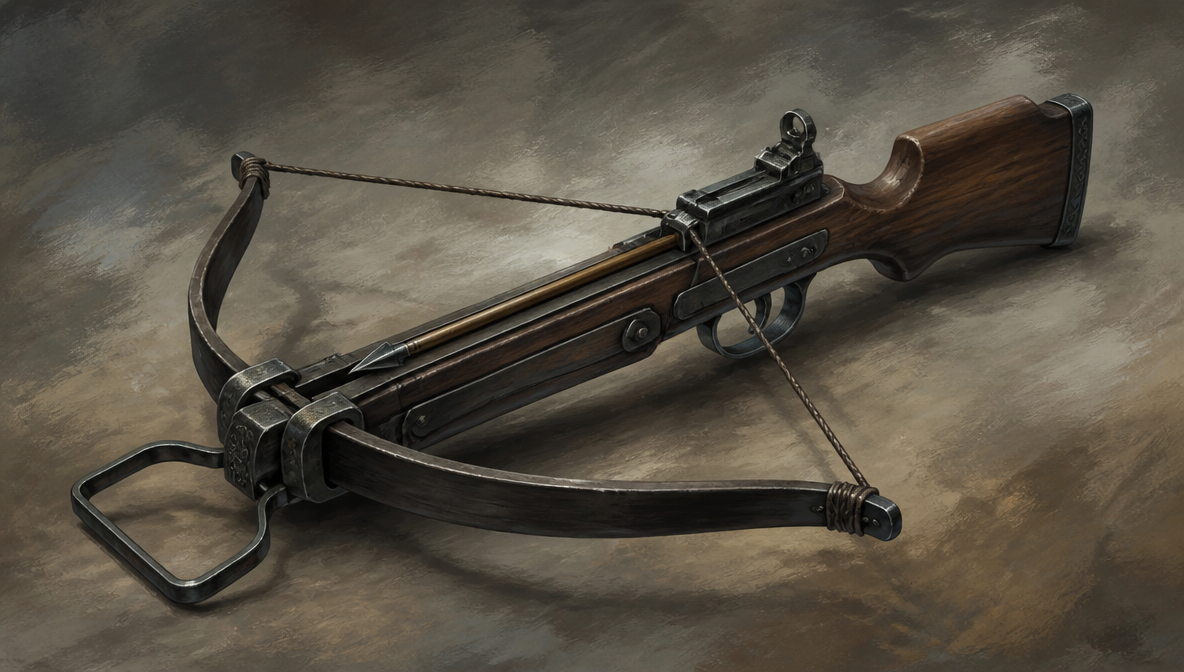
As armor became thicker, European crossbows evolved from simple wooden designs into composite bows made of horn, wood, and sinew. By the 14th century, European smiths began forging steel crossbows, creating immense draw weights that required mechanical cranks, pulleys, and levers (like the cranequin or goat's foot lever) to cock.
The crossbow remained the dominant missile weapon of continental Europe until it was eventually replaced by firearms in the 16th century, forever changing the face of European combat.