







Top-Top Info Worldwide is a popular online newsportal and going source for technical and digital content for its influential audience around the globe.

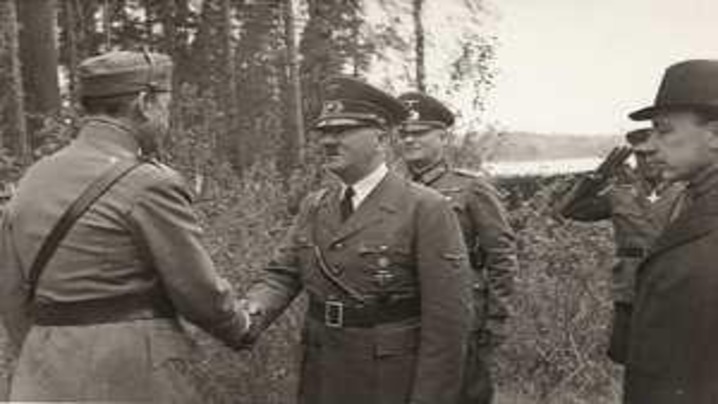
Ranking dictators as if human suffering were a competition creates false precision and can reduce victims to a score. Estimates of deaths differ because regimes hid evidence, archives remain incomplete, wars overlapped with state policy, and scholars use different definitions. A responsible comparison begins with documented actions, institutions, intent, and effects—not a sensational countdown.
“Dictator” is also a political description, not a complete legal category. International law separately defines genocide, crimes against humanity, and war crimes. A regime may commit one or more of these crimes, and the legal classification depends on evidence. Genocide requires specified acts plus intent to destroy, in whole or in part, a protected national, ethnic, racial, or religious group. Crimes against humanity involve specified acts committed as part of a widespread or systematic attack against civilians.
Nazi Germany joined racial ideology, one-party dictatorship, aggressive war, occupation, and industrialized mass murder. The Holocaust was the systematic persecution and murder of six million European Jews; Nazi Germany and its allies also persecuted and killed millions of other people. The regime’s crimes are documented through German records, physical sites, survivor and perpetrator testimony, and postwar trials.
Under Joseph Stalin, the Soviet Union experienced forced collectivization, famine, mass deportations, executions, the Gulag system, and the Great Terror. Scholars continue to distinguish deaths caused by deliberate killing, punitive policy, forced labor, deportation, and famine. That work is not denial or minimization; it is how historical responsibility is made precise.
Mao Zedong’s Great Leap Forward combined coercive collectivization, unrealistic production demands, information suppression, and punitive state practices during a catastrophic famine. The Cultural Revolution later unleashed persecution, political violence, and institutional destruction. Cambodia’s Khmer Rouge attempted a radical social transformation through forced evacuation, labor, imprisonment, execution, starvation, and persecution of targeted groups.
Other dictatorships—including military regimes, personalist states, and colonial systems—used different combinations of terror and exclusion. Idi Amin’s Uganda, Saddam Hussein’s Iraq, and Augusto Pinochet’s Chile cannot be responsibly reduced to one number or treated as identical. Their victims, institutions, regional settings, and bodies of evidence differ.
Death estimates may include direct executions, deaths in custody, famine mortality, combat deaths, or reduced births. A figure can change dramatically depending on the boundaries. Good sources state a range, method, time period, and category. They also revise conclusions as archives open or demographic methods improve.
Numbers matter, but they are not the only measure. A smaller state can devastate a larger share of its population. Torture, forced displacement, family separation, cultural destruction, and decades of fear cannot be captured by fatalities alone. Survivor-centered history preserves names, communities, and experiences that aggregate statistics obscure.
The United Nations’ framework for atrocity prevention emphasizes patterns rather than personalities alone: instability, serious human-rights violations, weak protective institutions, motives for targeting groups, enabling capacity, and triggering events. Propaganda that portrays people as threats or less than human can prepare the public for exclusion and violence.
The most useful lesson from studying dictatorships is not a hall of infamy. It is recognition of how institutions are dismantled, how ordinary administration becomes a tool of persecution, how evidence is suppressed, and how resistance, documentation, accountability, and international pressure can matter. Precision honors victims better than spectacle does.
Sources: United Nations: Definitions of Genocide and Related Crimes; United Nations: Rome Statute; UN Framework of Analysis for Atrocity Crimes; U.S. Holocaust Memorial Museum: Holocaust Introduction.

It's difficult to beat a team with six players who consistently score double digits per game, as exemplified by the 1971-72 Los Angeles Lakers who managed an impressive 33-game winning streak.
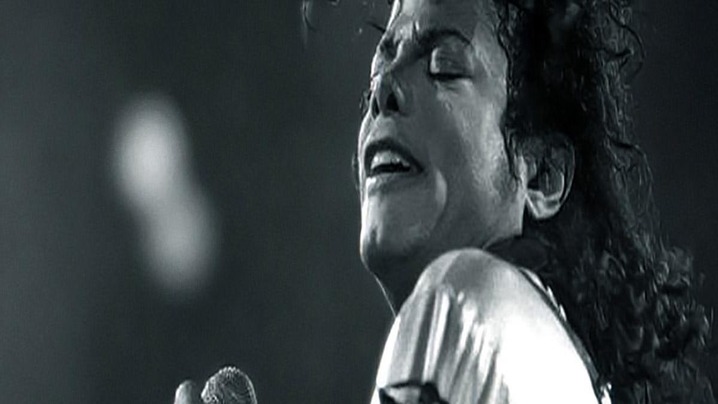
No defensible formula can identify the ten “best” pop singers. Vocal technique, songwriting, sales, innovation, performance, and cultural reach measure different things, while English-language charts capture only part of a global field. This non-ranked selection uses documented recordings and influence to show ten distinct ways artists changed popular music.
Franklin brought gospel training, rhythmic authority, and interpretive power into soul and mainstream pop. Her recordings made voice, piano, arrangement, and civil-rights-era meaning inseparable. Influence here is not simply a high-note contest; it is the ability to transform an existing song into a definitive personal statement.
As singers, writers, and a studio group, the Beatles helped shift pop albums from collections of songs toward deliberately sequenced works. Their collaborations with producer George Martin expanded the studio’s role as an instrument. Their global success also changed touring, fandom, and the economic scale of youth culture.
Jackson joined precise vocal phrasing, dance, short-film storytelling, and mass-market recording into a model for the modern global pop star. Albums such as Off the Wall, Thriller, and Bad crossed industry categories and shaped later performers. A complete historical account should address both the art and the serious controversies surrounding his life.
Madonna repeatedly treated image, choreography, music video, fashion, and provocation as parts of one pop practice. Her work tested boundaries around gender, sexuality, religion, and control of a public persona. Reinvention became not just publicity but an artistic and commercial method.
Prince’s singing, songwriting, instrumental skill, production, and prolific output challenged neat divisions among pop, funk, rock, and R&B. His disputes over ownership and contracts also made artist control part of the public conversation, influencing how later musicians discuss masters and creative independence.
Houston combined clarity, range, control, and gospel-rooted phrasing with sophisticated pop production. Her approach became a reference point for generations of vocalists and talent-show contestants. Her influence is audible in both restrained verses and climactic arrangements built around the lead voice.
Selena Quintanilla-Pérez expanded the audience for Tejano music and embodied a bilingual, bicultural form of stardom. Her Spanish-language catalog, live charisma, fashion, and crossover ambitions made her a lasting figure in U.S. Latino culture. Her career also demonstrates why pop history cannot be reduced to one language.
Fela’s long-form Afrobeat recordings joined jazz, funk, Yoruba musical ideas, sharp ensemble discipline, and political critique. Although “pop singer” is an imperfect label for him, his influence on globally circulating popular music is immense. His work foregrounds the relationship between performance and political risk.
Björk has used electronic production, unconventional arrangements, visual art, and technology to reconsider what a pop album can be. Her work moves between intimacy and experimentation without treating accessibility and complexity as opposites.
Beyoncé’s career links vocal performance, choreography, visual albums, touring scale, and detailed authorship. Projects drawing on Black musical traditions have widened mainstream conversations about genre, history, and ownership. Her evolution from group member to album-focused solo artist reflects major changes in twenty-first-century release strategy.
The Library of Congress explicitly says its National Recording Registry preserves works of cultural, historical, or aesthetic significance rather than declaring them the best. That is a useful model: pop history becomes richer when a list opens discussion instead of pretending to settle it.
Sources: Library of Congress; National Recording Registry; Recording Academy; Rock & Roll Hall of Fame.
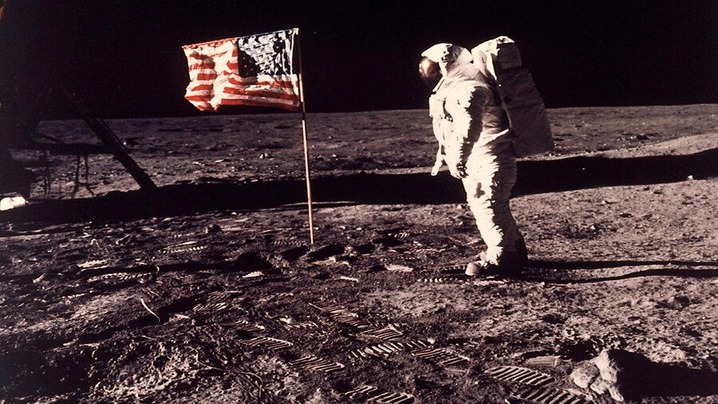
Humans have landed on the Moon six times, all through NASA’s Apollo program between 1969 and 1972. Calling them the “top” missions misses their real significance: each successful landing built on earlier engineering, operations, and science. Apollo 13 flew around the Moon but did not land after an onboard explosion, so it is not part of the six below. Together, the landing missions carried twelve people to the surface and returned samples and observations that researchers still study.
Apollo 11 launched on 16 July 1969 with Neil Armstrong, Edwin “Buzz” Aldrin, and Michael Collins. Armstrong and Aldrin landed the lunar module Eagle in the Sea of Tranquility on 20 July while Collins remained in lunar orbit. The landing demanded manual intervention when the planned area proved hazardous. During a single moonwalk, the surface crew collected samples, photographed the site, and deployed experiments before rejoining Collins for the return to Earth.
The mission’s achievement was operational as much as symbolic. Navigation, communications, spacesuits, life support, rendezvous, and reentry all had to work as a connected system. It also occurred within Cold War competition and after the fatal Apollo 1 fire, which had forced major design and management changes.
Launched in November 1969, Apollo 12 was struck by lightning shortly after liftoff but continued after the crew and controllers stabilized the spacecraft. Charles Conrad and Alan Bean landed near the robotic Surveyor 3 probe while Richard Gordon orbited above. Reaching a selected target demonstrated much greater landing accuracy. The astronauts visited Surveyor 3, retrieved components for study, installed scientific instruments, and collected samples from the Ocean of Storms.
Apollo 14 carried Alan Shepard, Edgar Mitchell, and Stuart Roosa in early 1971. Shepard and Mitchell landed in the Fra Mauro region originally intended for Apollo 13. They deployed experiments and attempted to reach the rim of Cone crater, but navigation and the demanding terrain led them to turn back shortly before the rim. Their experience showed the difficulty of judging distance and topography on an unfamiliar, nearly airless world.
With Apollo 15, NASA began longer “J-class” expeditions focused more heavily on science. David Scott and James Irwin landed near Hadley Rille while Alfred Worden operated instruments from orbit. The Lunar Roving Vehicle greatly expanded surface range and allowed heavier equipment and samples to be carried. The crew explored a geologically varied area and returned the rock later nicknamed the Genesis Rock, though its interpretation has evolved with continued analysis.
John Young and Charles Duke explored the Descartes highlands in April 1972 while Ken Mattingly remained in orbit. Scientists had expected evidence of volcanic processes, but returned samples indicated that impact-generated materials dominated the site. That result illustrates the value of fieldwork: a mission can be scientifically successful by disproving an attractive hypothesis.
The final Apollo landing paired commander Eugene Cernan with lunar module pilot Harrison Schmitt, a professional geologist; Ronald Evans remained in orbit. In December 1972, Cernan and Schmitt completed three rover-supported excursions in the Taurus-Littrow valley. Their observations and samples included orange volcanic glass, evidence of ancient explosive volcanism. Apollo 17 achieved the longest surface stay and returned more lunar material than any previous Apollo mission.
Apollo did not make the Moon familiar. It showed how much disciplined exploration can reveal—and how many questions remain for robotic and future crewed missions.
Sources: NASA: The Apollo Program; NASA Science: Moon Missions; NASA: Apollo 11; Lunar and Planetary Institute.
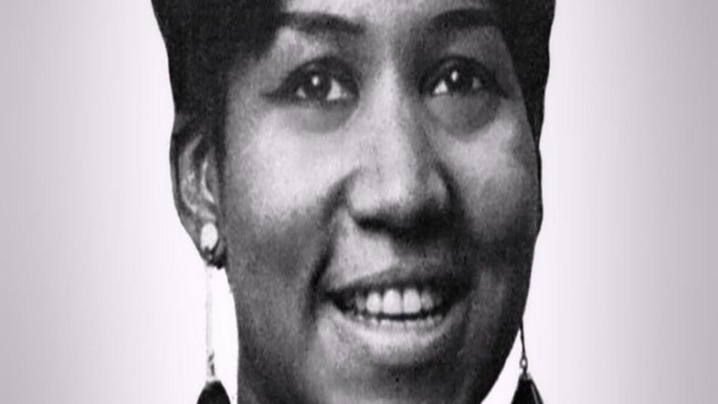
Soul music cannot be reduced to a vocal contest. It grew from Black gospel and rhythm and blues, then developed through distinct scenes in Detroit, Memphis, Muscle Shoals, Philadelphia, Chicago, and elsewhere. This unranked selection highlights ten voices that reveal different parts of that history.
Charles brought gospel-derived phrasing and call-and-response into rhythm and blues with extraordinary force, while also recording jazz, pop, and country. His genre-crossing success helped establish the commercial and artistic space in which soul would flourish.
Cooke carried the elegance of the Soul Stirrers into pop without losing his gospel control of melody and audience. His songwriting joined romantic directness with social vision; “A Change Is Gonna Come” became inseparable from the civil rights era and is preserved by the Library of Congress.
Franklin’s church training, piano playing, rhythmic authority, and interpretive intelligence changed the meaning of songs she recorded. Her version of “Respect” transformed Otis Redding’s composition into a statement of autonomy. She was also the first woman inducted into the Rock & Roll Hall of Fame.
Redding’s grain, urgency, and controlled escalation defined a central strain of Southern soul. Working with the Stax studio community in Memphis, he could make a ballad feel conversational before driving it toward release. His compact recording career became disproportionately influential.
Gaye moved from polished Motown singles to expansive, self-questioning albums. His layered vocals could sound intimate or communal, and his work widened the subjects available to a mainstream soul artist—from romance to war, ecology, faith, and urban distress.
Green’s partnership with producer Willie Mitchell created a supple Memphis sound built on space, restrained rhythm, horns, and a voice that could leap from a murmur to falsetto. His recordings demonstrate that intensity does not require constant volume.
Knight combines clarity, grit, and narrative command. With the Pips, she made ensemble response an essential part of the drama. Their work across labels also traces a path from early R&B through Motown discipline to the fuller arrangements of 1970s soul.
Wonder joined virtuoso singing and songwriting with keyboards, synthesizers, studio experimentation, and social commentary. His classic 1970s albums expanded soul’s sonic palette while preserving groove, melody, and emotional immediacy.
Staples brought the family gospel sound of the Staple Singers into folk festivals, civil rights music, and soul. Her low, textured voice conveys moral weight without losing warmth. The group’s recordings show how sacred tradition and public activism could reinforce one another.
Hathaway was a singer, arranger, keyboardist, and producer whose harmonic sophistication connected gospel, jazz, classical training, and soul. His live recordings are especially valued because they capture the exchange between performer and audience at the heart of the tradition.
These artists influenced one another and depended on songwriters, bands, arrangers, engineers, churches, and labels. A deeper listening journey follows those connections: gospel quartets into Sam Cooke, Stax songwriting into Aretha Franklin, Motown production into Marvin Gaye, and civil rights repertoire into the Staple Singers. “Greatest” is subjective; influence becomes clearer when recordings are heard in history.
Regional scenes and overlooked performers reward exploration beyond any short introductory list.
Sources: Library of Congress: African Americans on the Recording Registry; Smithsonian: Aretha Franklin; Rock Hall: Marvin Gaye; National Recording Registry; NEA: Roebuck “Pops” Staples.
Top-Top Info Worldwide is a popular online newsportal and going source for technical and digital content for its influential audience around the globe.