Read the documents, not the quote card
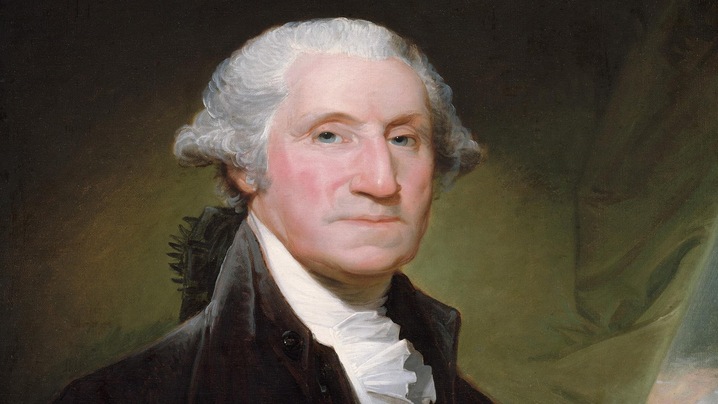
George Washington left an enormous documentary record: military orders, farm correspondence, presidential papers, private letters, speeches, and a will. That abundance makes him easy to quote and easy to misquote. A sentence detached from its recipient and date can sound like a timeless slogan even when it answered a specific political crisis. The most useful way to encounter Washington’s words is therefore by theme, with the original document close at hand.
1. Reputation required daily discipline
Washington treated character as something built through repeated conduct. His youthful copying of the “Rules of Civility” was not a collection of original sayings, but it shows an early interest in restraint, courtesy, and self-command.
2. Civilian authority should control the military
At the end of the Revolutionary War, Washington resigned his commission to Congress. The act mattered as much as any sentence: military power was returned to the civil government instead of becoming a personal possession.
3. Union was a practical safeguard
In his Farewell Address, Washington argued that regional loyalties could make the young republic vulnerable. Read in context, his concern was not uniformity; it was whether states with different interests could preserve a shared constitutional system.
4. Political factions could become self-serving
Washington worried that organized factions might place victory over public responsibility. His warning is often simplified into hostility toward all disagreement, but the document focuses on the danger of durable parties capturing government for narrow ends.
5. Public credit depended on trustworthy government
Letters and presidential messages repeatedly connect national strength with paying debts and administering finances credibly. For Washington, independence required institutions capable of keeping commitments.
6. Religious liberty was broader than toleration
His correspondence with American religious communities described conscience as a right rather than a favor granted by a majority. These letters are best read alongside the Constitution’s prohibition on religious tests and the First Amendment.
7. Education supported self-government
Washington advocated a national university and broader access to useful knowledge. He believed citizens and officials needed enough understanding to resist sectional prejudice and govern a large republic.
8. Agriculture was both business and experiment
At Mount Vernon he tracked crops, soils, tools, weather, and livestock. The records reveal curiosity and adaptation, but also the brutal foundation of plantation production: the labor of enslaved people.
9. Slavery exposed a profound contradiction
Washington defended liberty while enslaving more than one hundred people personally and controlling many others through the Custis estate. His will provided for the emancipation of people he owned after Martha Washington’s death, a significant but delayed and limited act that did not erase decades of exploitation.
10. Intelligence mattered in war
His military correspondence shows attention to reconnaissance, secrecy, logistics, and misinformation. Victory depended on information systems as well as battlefield courage.
11. Leadership meant managing disagreement
Cabinet papers reveal Washington soliciting competing arguments from figures such as Alexander Hamilton and Thomas Jefferson. Consensus was not assumed; decisions often followed structured conflict.
12. Constitutional government required restraint
By leaving office after two terms, Washington established a precedent rather than a legal rule. The choice helped define the presidency as a temporary public trust.
13. Historical words need provenance
Before sharing a quotation, search a reliable edition for distinctive words, open the complete document, and verify date, recipient, and editorial notes. If no primary record appears, label the attribution uncertain rather than upgrading repetition into evidence.
Sources: Founders Online, National Archives; Library of Congress: George Washington Papers; National Archives: Papers of George Washington; Mount Vernon: Washington and slavery.