
Why themes are more reliable than internet quotations
Brigitte Bardot's image circulated through films, magazines, songs, interviews and political controversy for more than seven decades. Quote lists often detach a sentence from its date, language and publication, and some reproduce translations that cannot be traced to a reliable record. A better introduction is to examine the documented themes that shaped her public life. Bardot, who lived from 1934 to 2025, left a legacy that is culturally important and deeply contested.
Twelve themes that explain her significance
- Ballet training: Raised in Paris, Bardot studied ballet before modeling and acting. That training contributed to the physical confidence and movement that became central to her screen presence.
- Fashion modeling: Magazine work brought her to the attention of filmmakers while she was still a teenager. Her transition from model to actor also anticipated the modern feedback loop between fashion, publicity and cinema.
- And God Created Woman: Roger Vadim's 1956 film made Bardot an international star. Its presentation of female desire challenged conservative expectations even while the camera turned her into a spectacle.
- Saint-Tropez: Location filming and Bardot's later residence helped transform the town into a symbol of leisure and celebrity. The resulting tourism also contributed to the loss of privacy she repeatedly criticized.
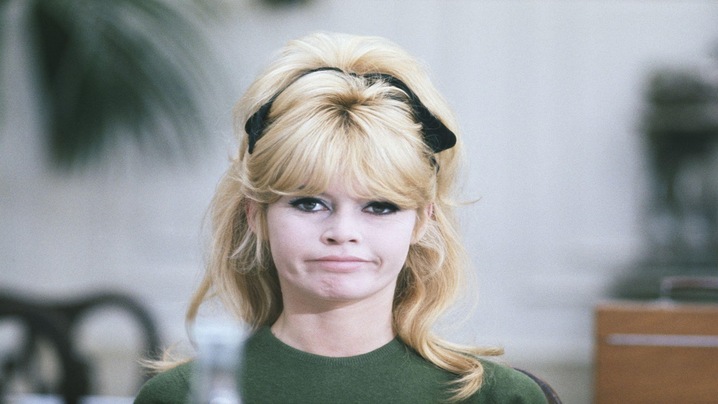
- A modern screen persona: Her loose hair, casual clothing and apparently unstudied behavior contrasted with more formal star images. Audiences read that style as youthful independence, though it was also carefully circulated by media industries.
- Comedy: Bardot's popular comedies are sometimes eclipsed by her iconography. Films such as Une Parisienne and Babette Goes to War show timing and self-aware play with the roles assigned to her.
- Serious drama: In La Vérité, directed by Henri-Georges Clouzot, her character is judged in court and by a wider patriarchal culture. The film became one of her most substantial dramatic showcases.
- Art cinema: Jean-Luc Godard's Le Mépris placed Bardot inside a film about marriage, commerce and filmmaking. Her celebrity is not decoration; it is one of the work's subjects.
- Music: Bardot recorded numerous songs, including collaborations associated with Serge Gainsbourg. This part of her career extended her voice and persona beyond the cinema screen.
- Early retirement: She stopped making films in 1973, before age forty. The decision fixed her cinematic image in a narrow historical period while allowing decades of later activism and public statements to reshape her reputation.
- Animal advocacy: Bardot devoted money and attention to animal welfare and established a foundation in the 1980s. Campaigns against fur and animal killing became the central public project of her later life.
- Political controversy: Her public record also includes anti-immigrant and anti-Muslim statements, far-right sympathies and multiple French convictions related to inciting racial hatred. Any account that celebrates only charm or compassion omits people harmed by that rhetoric.
How to approach the legacy
Bardot can be historically influential without serving as an uncomplicated role model. Her screen characters expanded the visible possibilities for female desire in postwar popular culture, yet many films also depended on objectification. Her animal advocacy mobilized attention, while some arguments were expressed through discriminatory generalizations. These facts belong in the same biography.
Readers looking for her exact words should prefer dated interviews, books, archival broadcasts or court records in the original French. A quotation should identify the source and translator; unattributed image cards are not evidence. For understanding the actor, watching the films is more revealing than collecting slogans. And God Created Woman, La Vérité and Le Mépris show three very different uses of her persona: explosive star-making, dramatic judgment and critical reflection on celebrity.
A mature assessment does not need to choose between icon and villain. It can recognize cinematic innovation, media exploitation, personal agency, effective advocacy and harmful political speech. That tension—not a polished list of pleasant sayings—is what makes Bardot a consequential figure in twentieth-century French culture.
Sources: British Film Institute: Brigitte Bardot obituary; BFI: Five Bardot films; BFI: Le Mépris; Fondation Brigitte Bardot.