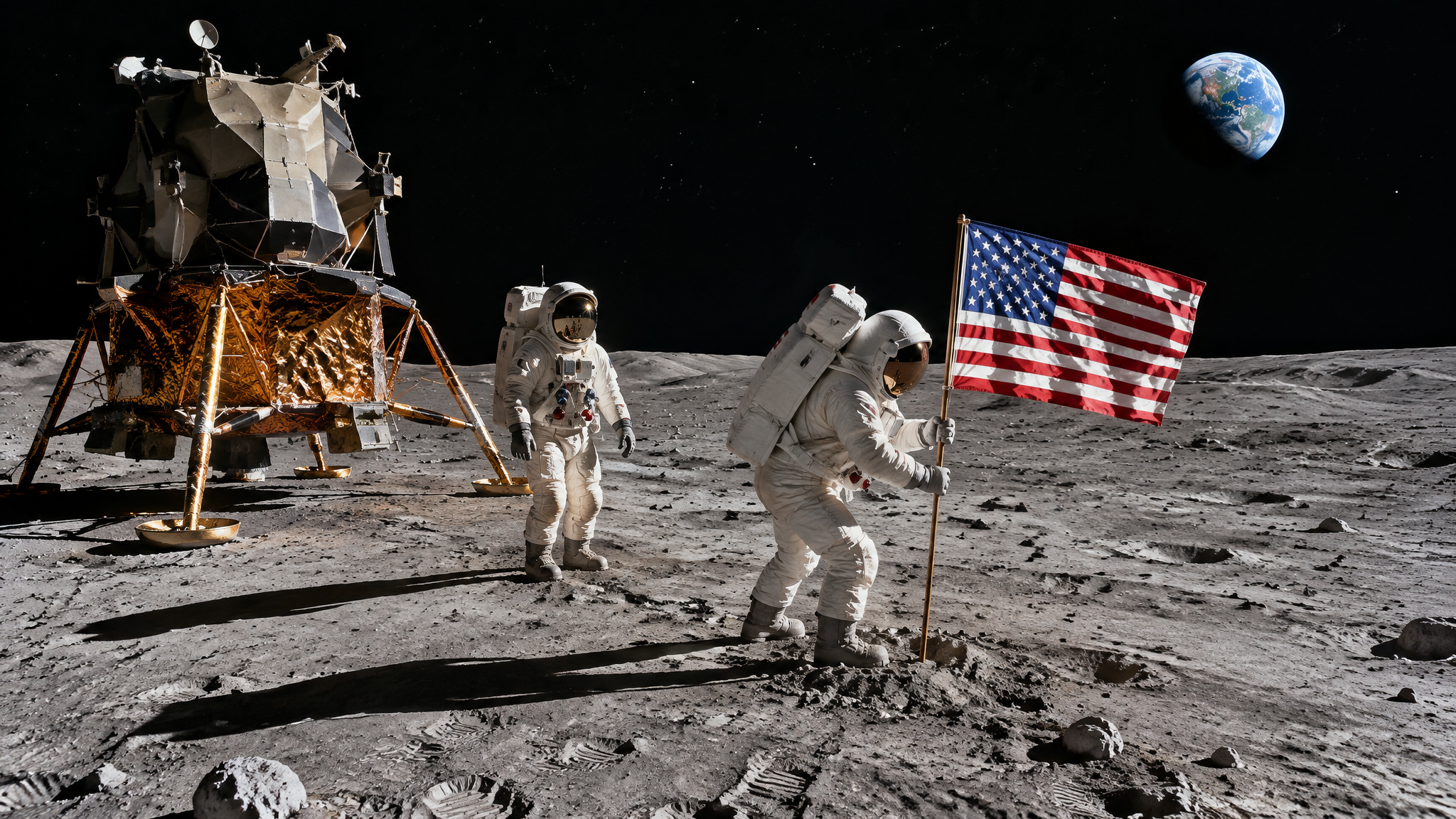
In 1971, the mission "Apollo 14" went to the Moon with an ambitious task - to explore the area of the crater Fra Mauro considered promising for geological exploration. Commander Alan Shepard, lunar module pilot Edgar Mitchell and command module pilot Stuart Rus prepared to land without realizing that something beyond scientific expectations was in store.
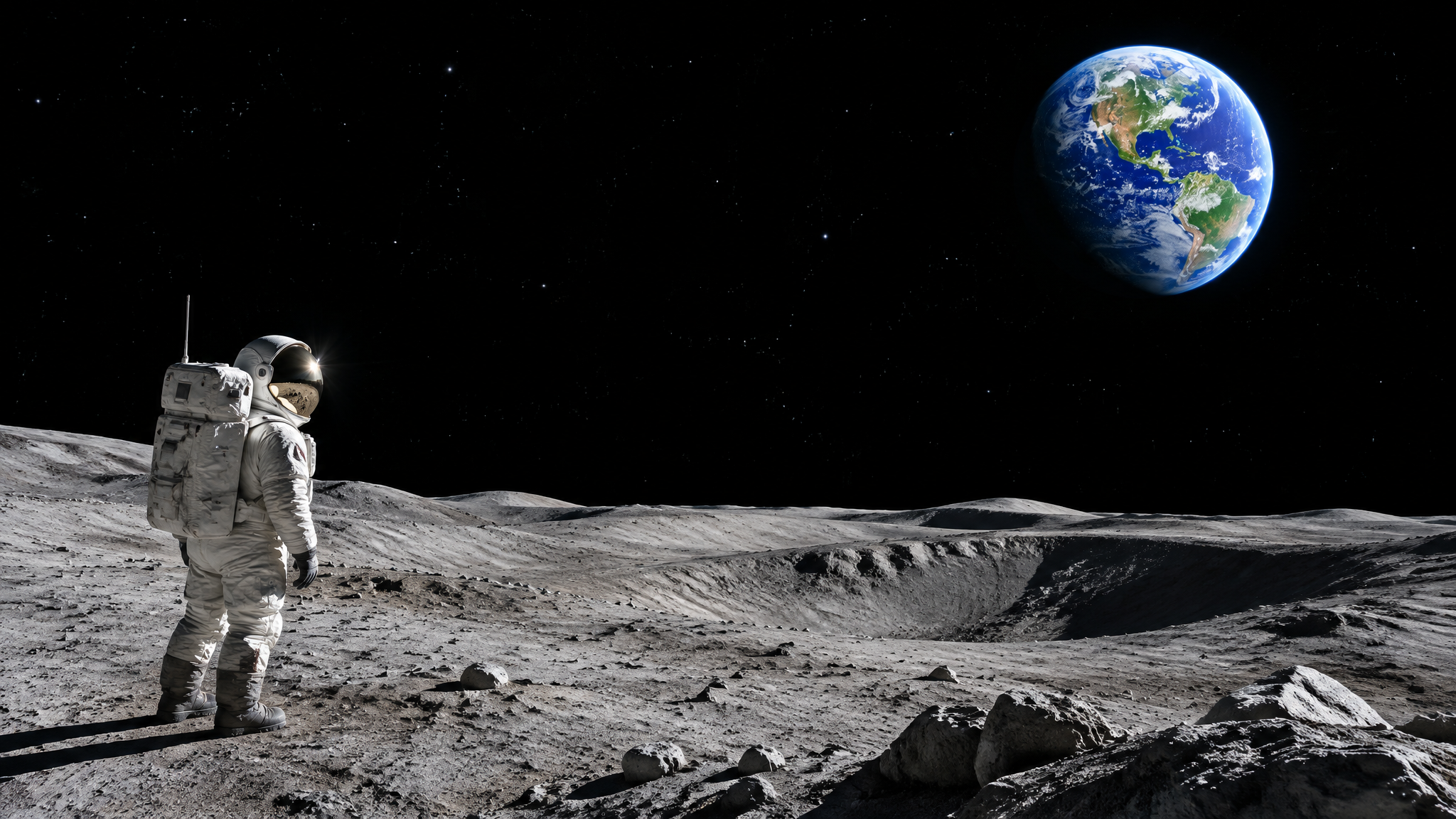
After a successful landing, Shepard and Mitchell began working on the surface. They collected soil samples, installed scientific instruments and made progress toward their intended goal - a deep crevice marked on the maps as an anomaly. As they approached, the astronauts noticed that the terrain around it looked unusual: the stones lay in straight rows, and the surface of the moon seemed strangely smooth, as if someone had leveled it.
When they reached the edge of the chasm, both were caught in breath. The fissure was drifting down by two kilometers - this could be seen from the laser rangefinder data. Its walls were almost vertical, with rare protrusions, and the bottom was lost in darkness. But the weirdest thing began when Mitchell directed a starlight there. A ray of light pierced the darkness, and for a moment everyone came to a standstill: at the bottom of the chasm shimmered an even, unnatural light. He did not pulse, did not change the intensity - simply radiated a soft bluish glow as if the source of energy was hidden beneath the surface of the moon.
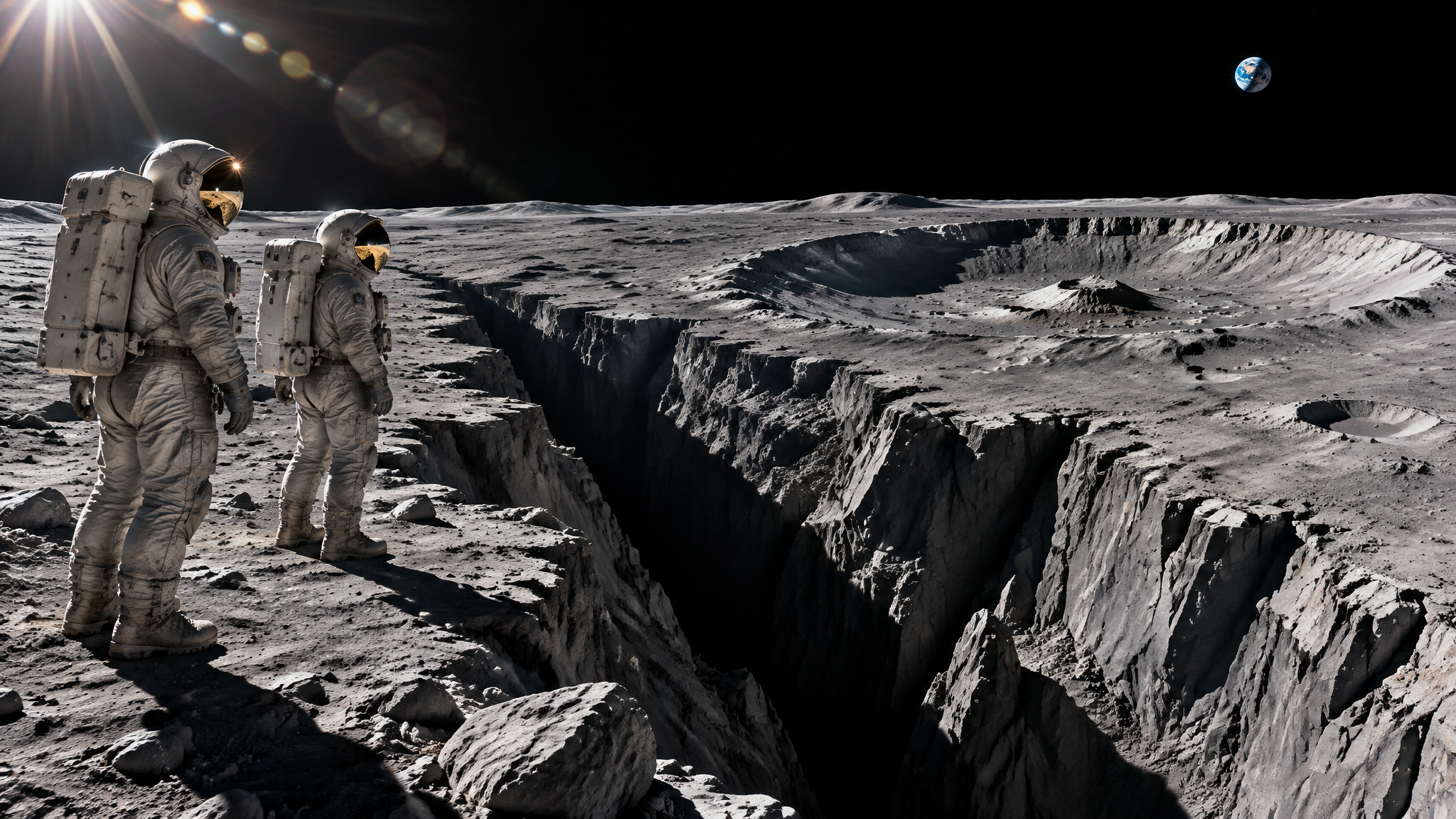
"Alan, do you see this?" said Mitchell, squeezing the lanyard handle. Shepard nodded silently, looking away from the cleft. They exchanged glances through the helmet - in that moment, both realized they had encountered something unexplained.
Deciding to obtain more data, the astronauts launched a small probe with a camera and sensors. The device slowly lowered down, bringing the image to the screen. At first, only the smooth walls of the fissure were visible, then strange markings resembling symbols. And then, at a depth of about a mile and a half, the camera caught movement. Something huge, dark, with unclear features began to rise from the depths. It moved smoothly, without rushing, as if aware that it was being watched.
Mitchell instinctively turned away from the edge. "We need to leave," he said, but Shepherd hesitated, glancing down. At this point, the communication with the probe was interrupted - the screen went out and the sensors showed a sharp surge in electromagnetic radiation.
What happened next was never officially reported by the mission. According to Mitchell, later in private conversations, he and Shepherd could feel the cold running down their skin despite being insulated by suits. Out of the chasm, a low sound - not through the air, but, it seemed, directly through the ground, vibrating in the bones. Then shadows appeared on the edge of the fault. They were not like the usual shadows of stones - these moved, stretched out as if trying to reach the astronauts.
"Run!" shouted Shepard, and they rushed to the lunar module. The engines started earlier than planned, the start was sharp, almost an accident. In orbit, when the danger was behind them, both remained silent for a long time, gazing at the moon through an illuminator. What did they see? What rose from the depths?
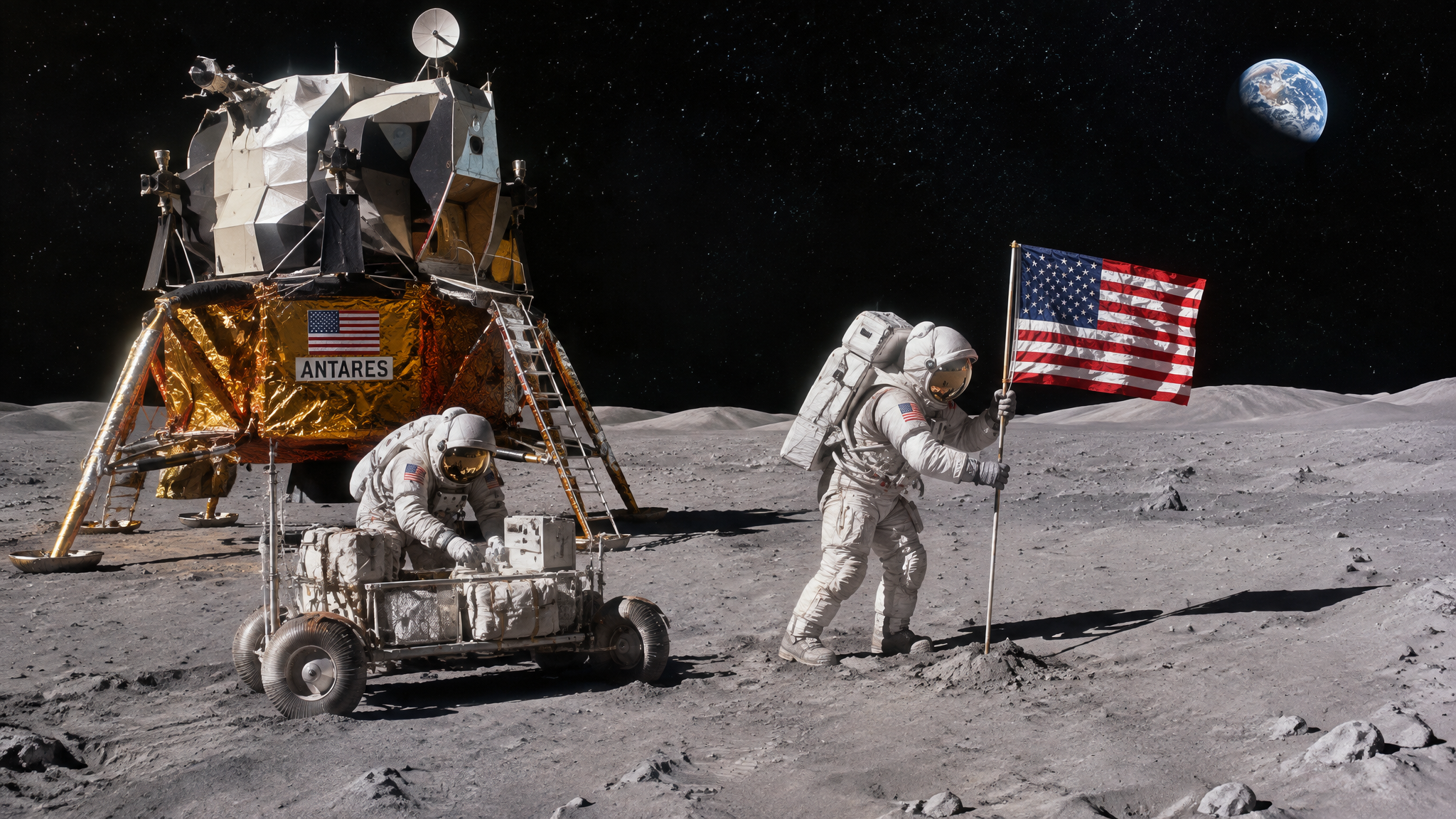
The official reports of the "Apollo 14" mission describe the cleft as a geological anomaly with no signs of activity. The strange light and movement recordings were edited, and footage from the probe camera was officially lost due to interference. Edgar Mitchell remained silent for years, only occasionally hinting in an interview that the moon was "not as dead as it seems." He argued that humanity was not yet ready to know the full truth of what lay beneath its surface.
So far, anomaly researchers and ufologists debate whether this was a natural phenomenon, an optical illusion, or evidence of an ancient extraterrestrial civilization. Some believe that a "moonwell" is the entrance to underground structures left behind by those who once visited the moon. Others believe that the astronauts encountered something that was deliberately hidden from the public. But one thing remains the same: photographs of gaps taken by "Apollo 14" still raise questions. They show a fault with smooth walls and dark bottom, and if you look at the shadows at the edge, you can see strange distortions - as if something is hiding there, waiting for someone to see into the depths again.
Found an error? Request a correction · Our corrections policy


