
On 4 May 1943, near Cape Farvey, in southern Greenland, the German submarine U-209 under the command of Lieutenant Henry Broadda reported to headquarters that it had received damage to the hull, periscope and main transmitter, so it could no longer patrol. The German command ordered to return immediately. The boatmaster reported that he was heading for the base at Greenland. And about this a little later. But a few days later the submarine, which had been in regular contact, stopped reporting its position. She simply disappeared, and on 19 May was declared missing.
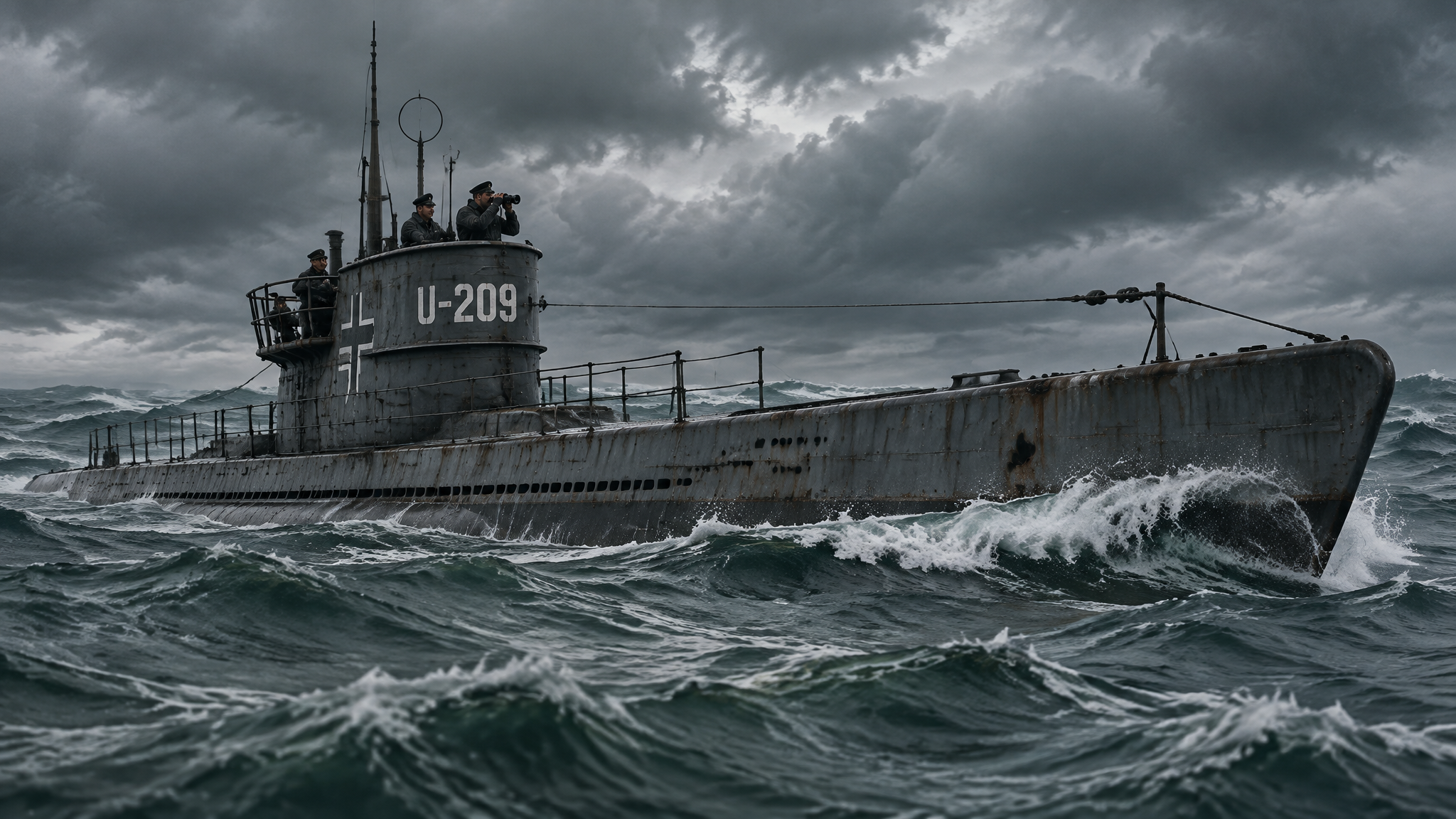
According to an official note of 4 May 1943, while on patrol in the North Atlantic, a German submarine U-209 was allegedly attacked with deep bombs from a Canadian "Catalina" type seaplane and sank. Together with the submarine, the entire crew (46 people) allegedly died. In the official version of the death of the submarine, there are many obvious contradictions.
For example, how could a boat be killed by a Canadian seaplane on May 4 if it was making contact a few days later and reporting that it was heading safely to the north base? That is why there is no consensus among researchers about the fate of the submarine. Thus, until the end of the 20th century, historians believed that the death of the German submarine U-209 may have been caused by an attack on British ships.
True, it was later revealed that the attack killed a German submarine U-954 rushing to assist boat U-209. Many historians believe that the Canadian seaplane "Catalina" destroyed not U-209, but U-630 on 6 May 1943. And this is indicated by the radio from the downed boat U-630. And so on.
Therefore, the official account of the death of U-209 is only an unconfirmed version and nothing more. So what happened to this boat? And it’s quite interesting.
It turns out there is a fantastic version that the German submarine, heading to its northernmost base at Ellesmere, which is on Canada’s northern border with Greenland, has collapsed into a barren Earth.
And circumstantial evidence suggests that not everything in this fantastic version is as fantastic as it seems at first glance.
For starters, many polar and seafarers have repeatedly noted that north of Canada and Greenland, north of the island of Ellesmere, are unusual natural phenomena and oddities: lack of ice, warm climate, unusual sun, and even tropical plants brought in from somewhere at the North Pole.
In the coastal area of Ellesmere Island, there is supposedly a huge tunnel, an underwater entrance to Polyia Earth. Not for nothing did the Germans build their northernmost secret base on the island of Elsmere. For what? There were never any caravan routes there, nor any minerals. To study the weather, it’s funny.

So why did Germany need to build a huge subterranean base there? And it’s quite interesting. It turns out, to study "The Earth’s Floor." Incidentally, the damaged German submarine U-209 rushed into this area.
But there is an even more surprising fact in the story of the mysterious disappearance and further fate of the German submarine U-209. There is a German-language letter about the very submarine U-209 that is officially believed to have sunk in 1943, somewhere in the North Atlantic. Here is a copy of this letter in German.
The original of the letter was presented to the world in 1985 by a certain Joe Watson from Talktown, Alaska, whose father had been hiding out after the war in one of South America’s German colonies. This letter was allegedly written to Joe’s father, one of the crew members of the German submarine U-209 Carl Unger. The letter is dated April 1947, four years after the alleged official death of the submarine.
Dear old friend!
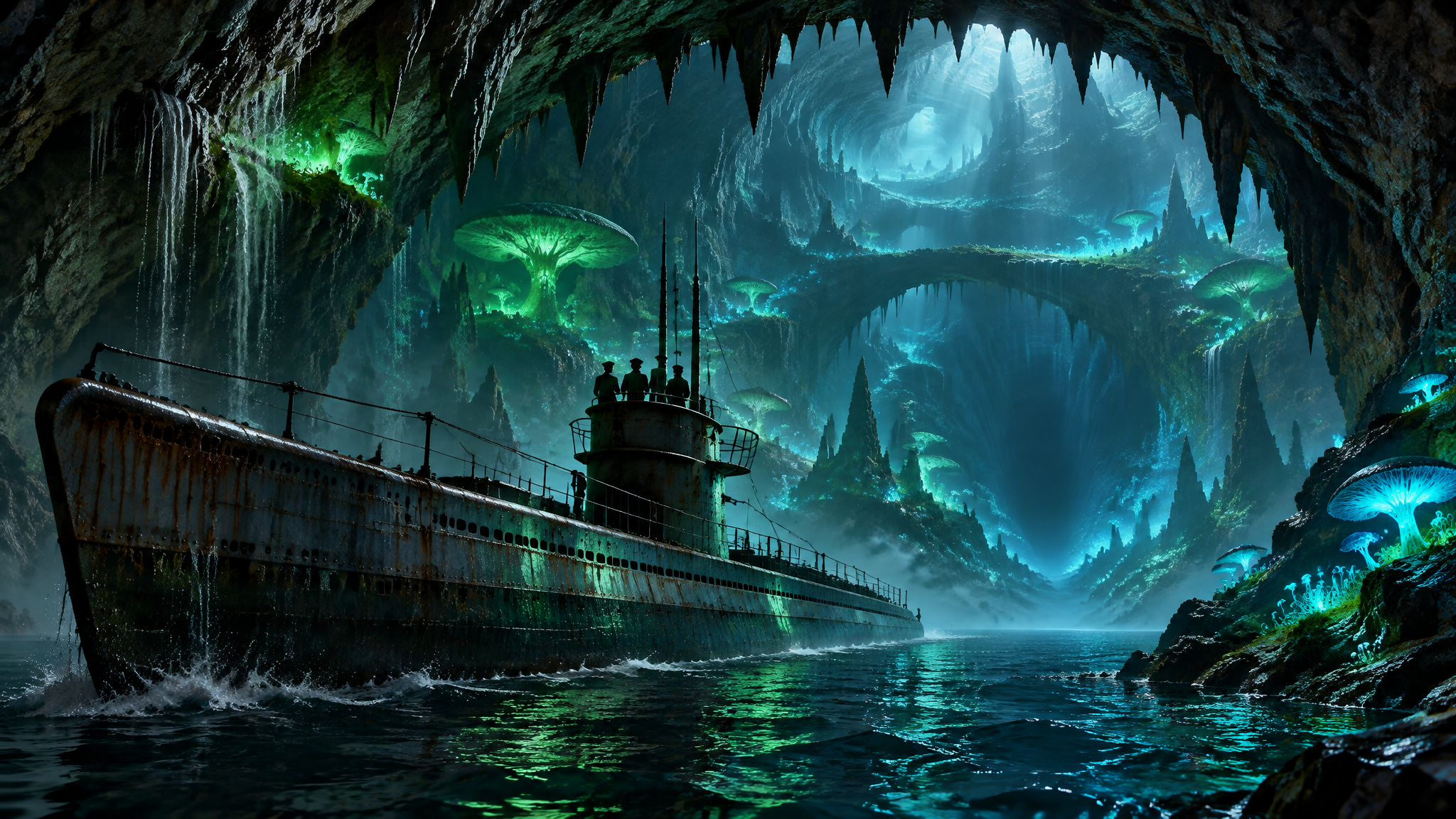
The news you’re about to hear will be a surprise for you. U-209 did it!!! Earth - Poley!! Dr. Haushofer and Hess were right. The entire crew is fine, but they can’t go back even though they are free.
I’m sure this news will get to you, but it’s the last time U 209 is on the line. We’ll meet again, buddy. I worry about everyone who has to stay on Earth since the Führer is gone.
May God always protect Germany,
It is likely that the German command faked its submarine’s demise so as not to search for its traces.
Do you think that’s all? Of course not! The island of Elsmere holds many secrets and mysteries. It also bears a Soviet trace!
Does number 209 (referring to boat U-209) ring a bell?
Recall, on 12 August 1937, a four-engine DB-A aircraft with the flight number N-209 under the command of Levanev began flying from Moscow via the North Pole, to the United States, to Alaska. The number of the German submarine was 209, and the number of the plane was also 209. A surprising coincidence.
So, radio communication with the aircraft was interrupted on 13 August, at 14:49 Moscow time, after which the plane found itself over the North Pole. Levannevsky reported the failure of the extreme right engine and poor weather conditions. "Refused the extreme right because of the oil system. Let’s go in threes, hard. We are going into the continuous clouds. Altitude 3600. Levanovsky.
Nothing more is known about the fate of the aircraft and crew.
Found an error? Request a correction · Our corrections policy


