





Top-Top Info Worldwide is a popular online newsportal and going source for technical and digital content for its influential audience around the globe.


Military coups have been pivotal events in the history of many nations, often leading to profound changes in government, policy, and international relations. This article highlights five significant military coups that not only altered the courses of the nations they occurred in but also had broader implications for regional and global politics.
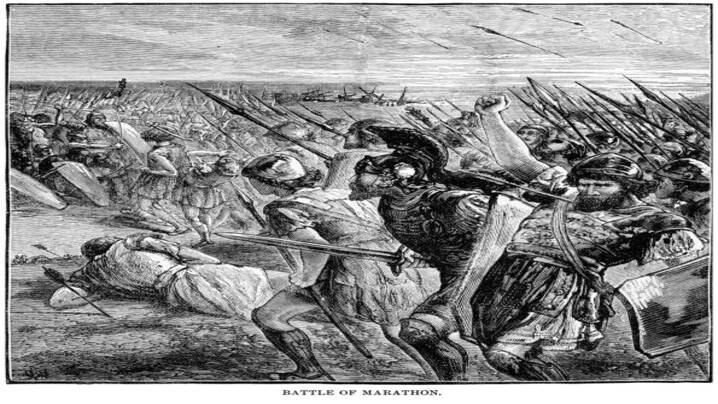
Throughout history, numerous battles have shaped the destinies of civilizations, redrawn borders, and altered the global geopolitical landscape. This article delves into five such battles, each unique in its own right, highlighting their strategic significance and lasting impact on the world.

The Tsar Bomba, also known as AN602, was the largest man-made explosion in history. It had a massive yield of 50-58 megatons and its flash could be seen from a distance of 620 miles. It was detonated on October 30, 1961, and had a burn radius of 4080 square miles.

Sergey Ilyushin, a Soviet aircraft designer, is known for creating the Il-2 strike aircraft and Il-4 bomber, which were the most widely used Soviet warplanes during World War II. Born into a peasant family, Ilyushin went on to become a three-time Hero of Socialist Labor.

There is no objective way to name the five “best” commanders in world history. Armies, technology, political goals, and surviving evidence differ too much. A more useful approach is to examine commanders whose campaigns illustrate distinct strategic problems. The figures below are not models to celebrate uncritically; each used organized violence in a specific political setting. Their value for study lies in the decisions they made, the systems they built, and the limits they exposed.
Alexander combined a disciplined Macedonian infantry formation with hard-hitting cavalry and unusually rapid movement. His victories over the Persian Empire were not simply products of battlefield courage. He maintained pressure after victories, secured key cities and routes, and adapted his force as operations moved farther from Macedonia. His campaigns demonstrate how tactical success becomes strategic only when an army can keep moving, replace losses, and turn conquered territory into a functioning political order. His empire’s fragmentation after his death also shows the fragility of a system centered on one leader.
Hannibal’s crossing of the Alps and victories at Trebia, Lake Trasimene, and Cannae remain classic studies in surprise and battlefield geometry. At Cannae, his army drew the Roman center forward and then enveloped it from the sides. Yet Carthage ultimately lost the Second Punic War. Hannibal could win spectacular battles in Italy but could not destroy Rome’s alliance network or prevent Roman operations elsewhere. His career is therefore as important for the gap between tactical brilliance and political victory as for the victories themselves.
The Mongol conquests depended on more than mounted archery. Genghis Khan and his successors organized forces in standardized units, promoted commanders for performance, used scouts and messengers over long distances, and coordinated separated columns. They also employed terror and mass killing, realities that should not be hidden behind admiration for operational skill. The strategic lesson is that communications, intelligence, discipline, and a system for replacing commanders can make dispersed forces act with unity.
Napoleon’s corps system allowed large formations to march separately and concentrate for battle. This reduced congestion and created flexibility, while his use of artillery and aggressive maneuver repeatedly disrupted slower opponents. But later campaigns revealed the limits of the method. In Spain, resistance and a hostile population drained French strength. In Russia, distance, supply failure, weather, and enemy strategy devastated the invading army. Operational speed cannot compensate indefinitely for unsustainable political aims and logistics.
Eisenhower’s central achievement was not personal tactical control. As Supreme Commander in Europe, he managed an alliance whose governments and senior officers had competing priorities. The U.S. Army’s official history emphasizes his role in creating unity of command and sustaining trust among partners. Operation Overlord required forces from several nations to coordinate land, air, naval, intelligence, and logistical plans on an immense scale. Eisenhower demonstrates that modern command often means reconciling institutions rather than issuing brilliant orders alone.
Together, these cases suggest five durable questions for evaluating commanders: Did they connect battles to achievable political goals? Could their forces communicate and resupply? Did they learn when conditions changed? Could their system work without them? And what human cost did their strategy impose? Those questions produce a more honest assessment than a timeless ranking.
Sources: U.S. Army guide to military history; Encyclopaedia Britannica on Alexander; Encyclopaedia Britannica on Hannibal; Encyclopaedia Britannica on Genghis Khan; U.S. Army Center of Military History on Eisenhower.
Top-Top Info Worldwide is a popular online newsportal and going source for technical and digital content for its influential audience around the globe.