







Top-Top Info Worldwide is a popular online newsportal and going source for technical and digital content for its influential audience around the globe.

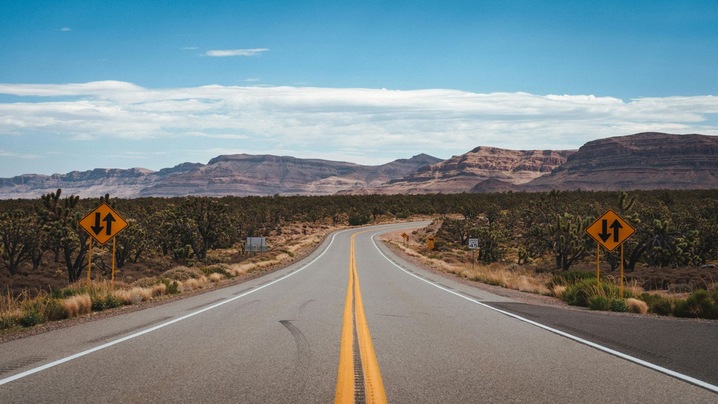
Embarking on a road trip is more than just a journey; it's a way to immerse oneself in breathtaking landscapes, discover hidden nooks, and embrace the freedom of the open road. The globe is strewn with roads that offer not just a path from point A to B but a ticket to adventure and unparalleled beauty. From the sun-drenched coasts to the rugged mountain ranges, here are the top 10 iconic road trip routes that promise an unforgettable journey.

Mount Athos, located in the northeast of Greece, is a significant center of Eastern Orthodox monasticism. Known as the ‘Holy Mountain’, this peninsula can only be reached by boat and is restricted to male visitors. Since the Byzantine era, monks have inhabited the area, with the Athonite monasteries housing remarkable artifacts, artworks, and ancient architecture. Visitors to Mount Athos can hike between monasteries, participate in religious services, and immerse themselves in the traditional monastic lifestyle that has been preserved for centuries.
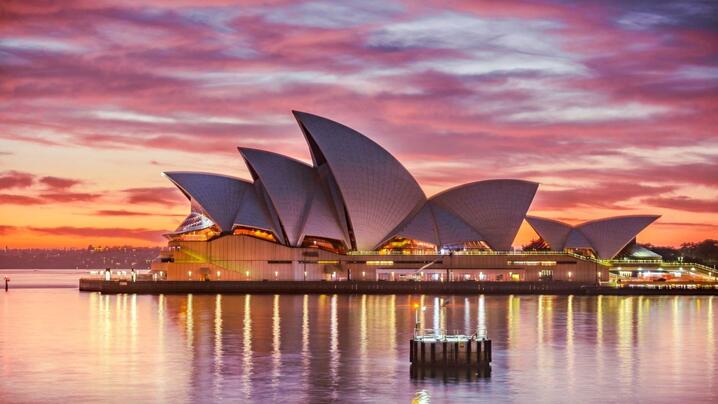
Australia rewards curiosity, but familiar travel slogans can flatten a complex place. It is a sovereign nation occupying most of a continent, a federation of states and territories, and home to hundreds of Aboriginal and Torres Strait Islander peoples whose relationships with Country long predate the modern state. These facts provide a grounded starting point for visitors and readers.
Aboriginal and Torres Strait Islander cultures are diverse rather than singular. Hundreds of language groups developed distinct laws, knowledge systems, trade networks, and responsibilities to land and sea.
The Commonwealth includes the mainland, Tasmania, and many smaller islands. In geographic discussions, “Australia” can mean the country, the continental landmass, or part of the wider region of Oceania, so context matters.
The interior is vast and often dry, while the largest metropolitan areas sit along the eastern, southeastern, and southwestern coasts. Australia’s population is highly urbanized despite its association with remote landscapes.
Canberra was selected as the federal capital after federation, positioned between the rival claims of Sydney and Melbourne. It became the seat of national institutions, including Parliament House.
New South Wales, Victoria, Queensland, Western Australia, South Australia, and Tasmania are joined by self-governing territories, most notably the Australian Capital Territory and Northern Territory.
The Reef Authority describes a marine park covering 344,400 square kilometres with roughly 3,000 reefs, hundreds of islands and cays, and many connected habitats.
More than 70 Traditional Owner groups have enduring connections to the Great Barrier Reef region. Responsible interpretation includes their custodianship as well as coral ecology.
Some plants depend on fire cues, but fire regimes vary greatly. Climate, vegetation, weather, ignition, and land management all influence risk; the idea that the entire landscape “needs burning” is dangerously simplistic.
Long geographic isolation contributed to high endemism. Marsupials, monotremes, reptiles, plants, and invertebrates include many species found nowhere else.
Habitat loss, invasive species, altered fire, disease, pollution, and climate change interact. Australia’s national conservation strategy recognizes that protection must occur across public, private, terrestrial, freshwater, and marine environments.
Arid and semi-arid regions contain varied ecosystems, communities, industries, sacred places, and travel routes. Visitors should plan for distance, heat, communications gaps, and culturally restricted sites.
Australia has no federally declared official language. English dominates public life, while immigrant languages and Indigenous languages form an important part of the country’s linguistic landscape.
Summer begins in December and winter in June, but tropical northern regions are often understood through wet and dry seasons rather than a four-season model.
Travelers must declare many foods, plant materials, and animal products. The rules protect agriculture and ecosystems from pests and diseases, and declarations are safer than guessing.
Check Traditional Owner guidance, park closures, fire and weather alerts, marine rules, and local access requirements. A map may show a destination without explaining its cultural or environmental sensitivity.
Sources: Australian Bureau of Statistics; Great Barrier Reef Marine Park Authority; Australian Government biodiversity conservation; AIATSIS Map of Indigenous Australia.
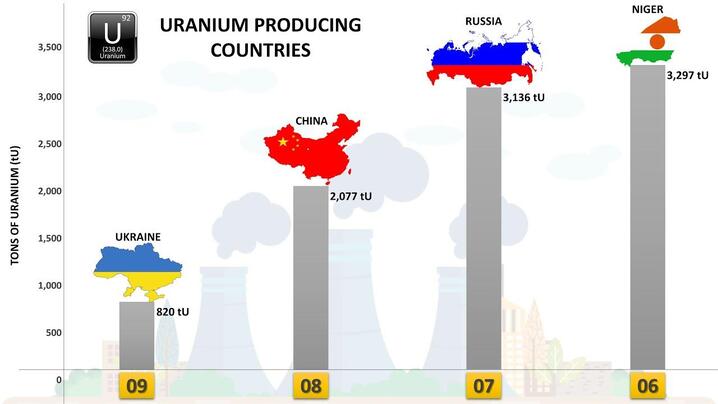
India has estimated total reserves of uranium at 30,480 tons. In 2023, it was estimated that 0.8 percent of the world's total uranium production came from India, with a production of almost 441 U.S. tons.

The Amazon River, situated in South America, is also connected to the Atlantic Ocean and is considered the longest river in the world by certain authors. It spans a length of 6,992 km, making it impassable, much like its counterpart, the Congo River.
Top-Top Info Worldwide is a popular online newsportal and going source for technical and digital content for its influential audience around the globe.