No formula can identify the best boxer across every era and weight class. Rules changed, championship structures multiplied, careers were disrupted by war or discrimination, and footage is scarce for early fighters. Heavyweights receive disproportionate attention even though pound-for-pound judgment is meant to compare skill across sizes. These seven boxers offer different reasons a career can matter; their order is chronological, not a ranking.
Jack Johnson: challenging the color line
Johnson became the first Black world heavyweight champion in 1908. His success confronted a segregated boxing culture whose promoters and writers openly sought a white challenger to defeat him. Authorities later prosecuted Johnson under the Mann Act in a racially charged case; he received a posthumous presidential pardon in 2018. His defensive skill and composure matter, but his larger legacy is inseparable from the freedom he asserted in public life.
Joe Louis: sustained heavyweight dominance
Joe Louis held the heavyweight championship from 1937 to 1949 and made 25 successful title defenses, a benchmark that still defines long championship reigns. His 1938 rematch victory over Max Schmeling acquired international symbolism as Nazi Germany used sport for propaganda, although Louis himself lived within American segregation. His economical combinations and consistency made dominance look methodical rather than theatrical.
Sugar Ray Robinson: the pound-for-pound standard
Robinson’s movement, combinations, adaptability, and long success at welterweight and middleweight made him the usual reference point for pound-for-pound discussion. His record also reflects an earlier boxing economy in which elite fighters competed far more frequently than modern champions. Comparing raw totals without that context is misleading. Robinson’s importance lies in the technical completeness observers saw across offense, defense, and transitions.
Muhammad Ali: strategy, rivalry, and public voice
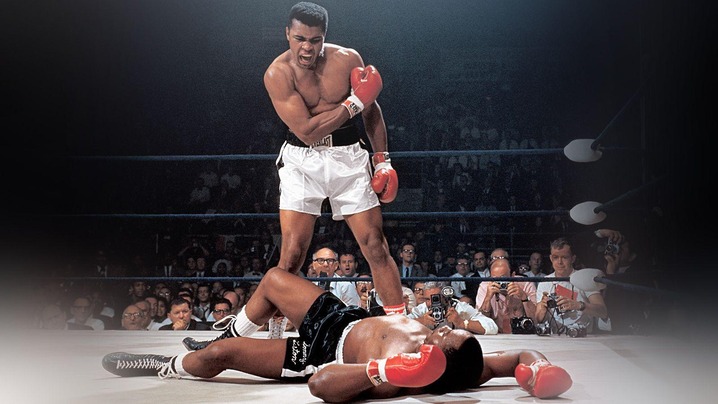
Ali won Olympic gold in 1960 and later became a three-time heavyweight champion. In the ring, his speed, distance control, psychological tactics, and ability to adapt produced defining contests with Sonny Liston, Joe Frazier, and George Foreman. Outside it, his refusal of military induction during the Vietnam War cost him years of his prime before the Supreme Court overturned his conviction. His cultural impact extends well beyond a win-loss record.
Roberto Durán: pressure with craft
Durán built his strongest claim to greatness at lightweight, where his aggressive style was supported by sophisticated defense, positioning, and body punching. He later defeated Sugar Ray Leonard at welterweight and won titles in additional divisions. His career’s uneven late chapters are part of the record, but they do not erase how effectively he combined pressure with technical control.
Manny Pacquiao: success across divisions
Pacquiao won recognized world titles across an unprecedented range of weight divisions, rising from flyweight to compete against elite welterweights. His explosive entries, angles, and high punch output were central to his success. Multiple sanctioning bodies and different definitions of a “world title” complicate numerical claims, but the scale of his movement through weight classes remains exceptional.
Claressa Shields: redefining opportunity
Shields won Olympic gold medals in 2012 and 2016, becoming the first U.S. boxer to win consecutive Olympic golds. As a professional she became an undisputed champion in multiple divisions during the four-belt era. Her career belongs in historical discussion not as a token addition but because it combines elite amateur achievement with rapid professional unification at a time when women’s boxing has gained wider institutional support.
A thoughtful comparison weighs quality of opposition, dominance within a natural weight class, longevity, technique, and the conditions a boxer had to overcome. It also recognizes boxing’s health costs. Greatness is an argument supported by evidence, not a title that statistics can settle automatically.
Sources: National Park Service on Jack Johnson; Encyclopaedia Britannica on Joe Louis; Encyclopaedia Britannica on Sugar Ray Robinson; Encyclopaedia Britannica on Muhammad Ali; Olympics profile of Claressa Shields.