More than a list of famous pets
Dogs have lived with many presidential families, but their historical importance is not measured by cuteness or popularity alone. They offer a view of private family life inside a public institution. They have also appeared in speeches, campaigns, photographs, films, books, and controversies, making them participants—usually unwitting ones—in presidential image-making.
The White House Historical Association reports that dogs have been the most common presidential pets. Records are uneven, especially for the nineteenth century, and not every animal associated with a president actually lived in the White House. The following examples are best read as windows into changing media and political culture rather than a ranked top nine.
Laddie Boy: a modern press celebrity
President Warren G. Harding’s Airedale terrier, Laddie Boy, arrived as mass-circulation newspapers and news photography were transforming political coverage. The dog attended events, appeared in photographs, and became a recognizable public character. His fame showed that a presidential pet could generate a friendly stream of stories separate from policy.
King Tut and the campaign image
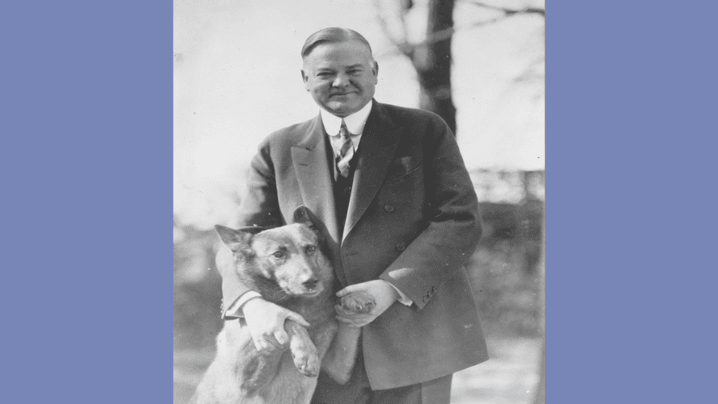
Herbert Hoover’s Belgian shepherd, King Tut, appeared with Hoover in a widely circulated image during the 1928 campaign. The photograph sought to soften a candidate perceived as reserved. The Hoover Presidential Library documents a much larger household of dogs, demonstrating how one memorable image can eclipse a more complicated pet history.
Fala: companion and political symbol
Franklin D. Roosevelt’s Scottish terrier Fala became one of the best-known presidential dogs. He traveled with Roosevelt, appeared in films and photographs, and received enormous public attention. In a 1944 campaign speech, Roosevelt mocked a Republican allegation involving the dog and government expense. The “Fala speech” showed how a pet could be used to deflect criticism and humanize a president during wartime.
Checkers: famous without living at the White House
Richard Nixon’s cocker spaniel Checkers is central to presidential-pet history even though the dog died before Nixon became president. In a nationally televised 1952 address defending his political finances, vice-presidential candidate Nixon said his family would keep the dog, a gift. The emotional appeal helped give the address its enduring nickname and demonstrated television’s growing power in politics.
Pushinka: a Cold War connection
Pushinka was given to the Kennedy family by Soviet leader Nikita Khrushchev. She was the offspring of Strelka, one of the Soviet dogs sent into space and returned alive. At the height of the Cold War, the small dog embodied an unusual thread of personal diplomacy and the space race. She later had puppies with the Kennedys’ dog Charlie.
Him and Her: a lesson in changing norms
Lyndon B. Johnson’s beagles, Him and Her, were frequently photographed. A 1964 image of Johnson lifting Him by the ears prompted criticism. Johnson said the dogs were accustomed to being handled that way, but the reaction illustrates changing expectations about animal welfare and the scrutiny attached to presidential behavior.
Liberty: staged and spontaneous family life
Gerald Ford’s golden retriever Liberty was a gift from presidential photographer David Hume Kennerly. Liberty gave birth to puppies at the White House, creating popular family stories during a presidency shaped by the aftermath of Watergate. Images with the dog helped present the residence as a lived-in home, although historians should still distinguish candid family life from deliberate public communication.
Millie: a pet with a publishing career
George H. W. Bush’s English springer spaniel Millie appeared in Millie’s Book, written in the dog’s voice with First Lady Barbara Bush. Proceeds benefited literacy efforts. Millie’s puppies included Spot, who later returned to the White House with President George W. Bush—an unusual canine link between two administrations.
Bo and Sunny: pets in the digital era
The Obama family’s Portuguese water dogs, Bo and Sunny, appeared in official photographs, videos, holiday events, and social media. Their visibility reflected a new communications environment in which the White House could publish pet content directly rather than relying entirely on newspapers or broadcasters.
What presidential dogs can—and cannot—tell us
Pets can make leaders seem approachable, provide companionship under intense pressure, and give children a connection to ordinary family routines. Their public stories can also be carefully curated. A cheerful photograph reveals something real, but it does not offer a neutral measure of character or policy.
Presidential dogs are most interesting when placed in context: Laddie Boy with the rise of mass media, Fala and Checkers with political speech, Pushinka with Cold War diplomacy, and Bo and Sunny with digital communication. Seen this way, they are not contestants in a popularity ranking. They are small but revealing parts of how Americans imagine the presidency.
Sources: White House Historical Association: First Family Life; White House Historical Association: Top Dogs; John F. Kennedy Library: Pushinka; Franklin D. Roosevelt Library: Fala; Herbert Hoover Library: First Family Pets.