
The fascinating world of volcanoes combines immense destructive power with the creative forces that shape our planet. Understanding their properties helps scientists predict eruptions and reveals how Earth cools itself. Here is a comprehensive guide to the essential physical, chemical, and geological characteristics of volcanoes.
Volcanoes are classified primarily by their shape, size, and eruption style:
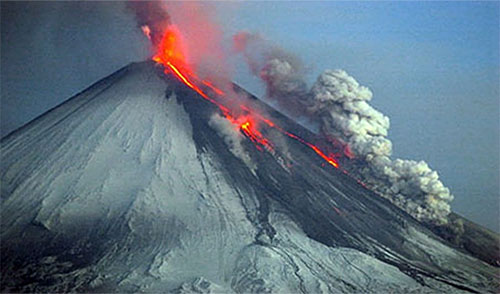
· Shield Volcanoes: Broad, gently sloping domes shaped like a warrior's shield. They are built by successive layers of low-viscosity basaltic lava. The Hawaiian Islands are classic examples.
· Composite Volcanoes (Stratovolcanoes): Tall, symmetrical, cone-shaped mountains. They consist of alternating layers of lava flows, volcanic ash, and cinders. Mount Fuji and Mount St. Helens belong to this category.
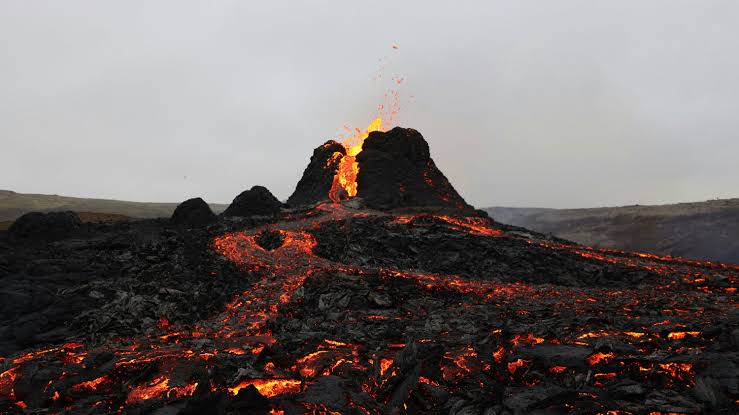
· Cinder Cones: Small, steep, cone-shaped hills. They form from explosive eruptions that eject blobs of lava, which cool rapidly into cinders around the vent.
Magma and Lava Properties
The behavior of a volcano depends heavily on the composition of its magma (underground molten rock) which becomes lava once it breaks through the surface:
· Viscosity: This refers to a liquid's resistance to flow. Low-viscosity lava is runny and travels long distances. High-viscosity lava is thick and sticky, moving slowly and often plugging volcanic vents.
· Silica Content: Silica (\(SiO_{2}\)) determines viscosity. Mafic magmas (basaltic) have low silica (less than 50%), making them runny. Felsic magmas (rhyolitic) have high silica (over 65%), making them highly viscous.
· Temperature: Molten rock is incredibly hot, typically ranging from 700°C to 1,200°C (1,300°F to 2,200°F). Basaltic lavas are the hottest, while rhyolitic lavas erupt at lower temperatures.
Eruption Mechanics
Eruptions are driven by the release of dissolved gases trapped within the magma:
· Effusive Eruptions: Occur when magma has low viscosity and low gas content. Lava flows gently out of the vent, creating expansive fields of rock.
· Explosive Eruptions: Happen when high-viscosity magma traps expanding gas bubbles. The pressure builds until it shatters the rock, blasting ash, gas, and pyroclastic material miles into the atmosphere.
· Volcanic Gases: Eruptions release massive amounts of water vapor, carbon dioxide (\(CO_{2}\)), sulfur dioxide (\(SO_{2}\)), and hydrogen sulfide. These gases can influence global climates and cause localized acid rain.
Pyroclastic Materials
During explosive events, volcanoes eject solid fragments called tephra, categorized by size:
· Volcanic Ash: Fine particles under 2mm in size, consisting of pulverized rock and glass shards.
· Lapilli: Pebble-sized fragments between 2mm and 64mm.
· Volcanic Bombs: Large blobs of molten rock ejected while soft, which cool into aerodynamic shapes as they fly through the air.
Environmental and Geological Impact
Volcanoes play a dual role in Earth's ecosystem. While pyroclastic flows and lahars (destructive volcanic mudflows) pose immediate threats to human life, volcanic activity is essential for life. Volcanic ash breaks down into incredibly fertile soil rich in nutrients like potassium and phosphorus. Furthermore, volcanic emissions over billions of years formed Earth's early atmosphere and oceans, proving that these volatile geological structures are fundamental to our planet's existence.